
This second edition of the siliconeoil industry brief tracks the surfactant and polyurethane additives chain from low-odour catalyst debuts and automotive foam silicone oils to flame-retardant foam research and specialty product matrices. Four items are drawn from material published or indexed between 3 and 17 November 2026, with the newest research record dated 11 November. Supplier advertisements, promotional product listings, quotation pages, telephone numbers, instant-messaging contacts and QR codes have been excluded, and source names appear as plain text.
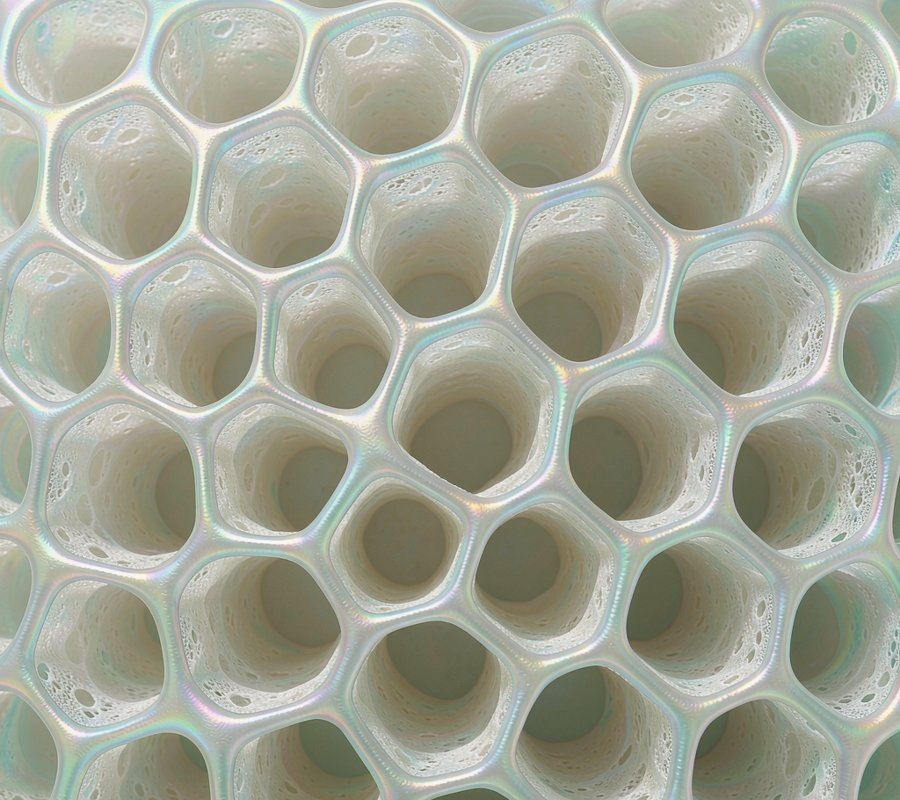
Low-emission catalyst and surfactant packages are being qualified against cell structure as well as VOC targets. (Original illustration)
1. Evonik Debuts Low-Odour Catalyst and Low-Emission Surfactants for Moulded Foam
1. Summary: At PU China 2026 in Shanghai, 3 to 5 November, Evonik presented two global and two Asia debuts for polyurethane foam under its “Beyond the Surface” programme, organising new products around insulation performance, flexible-foam recovery and emissions from automotive moulded foam. For rigid foam, TEGOSTAB silicone surfactants were paired with DABCO and POLYCAT amine catalysts for appliance, construction and cold-chain applications; TEGOSTAB B 84840 and EP-R-S 81 were positioned to improve surface quality, reduce voids and lower lambda values in rigid panels, although no measured panel lambda or long-term aging data were disclosed. The flexible-foam launches were more specific. TEGOSTAB B 8273 made its global debut alongside ORTEGOL 700 for mattress-in-a-box applications to improve post-compression recovery, while TEGOSTAB B 8292, also a global debut, targets viscoelastic and moulded MDI-based foams with claims on cell structure, hand feel, low emissions and processing stability. Two products made their Asia debut for automotive moulded foam: DABCO NE 1067, described as a negligible-emission catalyst, and DABCO SI 1218 LO, a low-odour surfactant, which the company said support original-equipment-manufacturer targets and reduce volatile organic compound exposure for workers and consumers. Evonik also showed TEGOSTAB B 8751 LCF and B 8763 LCF as lower-global-warming-potential surfactants said to retain foam quality and processing efficiency, without publishing comparative figures.
2. Source: PlasInsight, “PU China 2026: Evonik Targets Low-Emission PU Foams as Covestro Adds Cast-Elastomer Options,” English edition, November 2026. Booth details and promotional language removed.
3. Editor’s Pick + Reason: The pairing of a negligible-emission catalyst with a low-odour surfactant specifically for automotive moulded foam. Reason: It links catalyst and surfactant selection to a single measurable target, cabin VOC and odour, rather than a generic green claim, and the absence of published GWP or panel-lambda numbers flags exactly which data formulators must request before qualifying these grades.
2. Aosijia Maps Silicone Oils to Automotive Seating and All-Water Rigid Foam
1. Summary: A PU China 2026 opening-day report profiles Aosijia’s two-track additive lineup for flexible and rigid polyurethane foam. On the flexible side the company launched a water-washable slow-rebound solution and displayed high-resilience silicone oil, slow-rebound silicone oil, compression-resistant silicone oil, a sponge softener, a low-odor catalyst and an anti-compression aid, aimed at applications including automotive seating. The product set addresses a familiar processing tension: cell-opening and recovery in moulded foam must be achieved without raising odour or volatile emissions, which is why the low-odor catalyst and cell-regulating silicone oil are presented together rather than as isolated additives. On the rigid side Aosijia showed UR-16182 for all-water blowing systems, UR-16923 for refrigerator and panel insulation, and UR-16961 described as compatible with multiple blowing agents and delivering an ultra-low K value. The all-water grade is notable because water blowing generates carbon dioxide in situ and leaves formulators with a narrower processing window and greater sensitivity to catalyst and surfactant balance. The same report notes that polyether producers such as Sinochem Dongda were presenting high-resilience and soft-foam polyols positioned for low VOC and low odour, indicating that the low-emission requirement is propagating upstream from additives into the base polyol supply.
2. Source: PUdaily (Tian Tian Hua Gong Wang), “PU China 2026 opening day: industry giants gather, new-product highlights,” 4 Nov 2026. Booth and contact details removed.
3. Editor’s Pick + Reason: Grouping a low-odor catalyst, compression-resistant silicone oil and anti-compression aid into one automotive-seating solution set. Reason: Automotive foam is specified against odour, fogging and load-bearing at the same time, so a bundled formulation package is a more realistic qualification unit than a single additive, and the ultra-low-K all-water rigid grade shows the same logic on the insulation side.

Flame-retardant performance is increasingly reported with full thermal and mechanical data, not a single oxygen-index figure. (Original illustration)
3. Flame-Retardant Silicone Oil Routes Meet Composite Foam Fire Data
1. Summary: A technical review of flame-retardant silicone oil synthesis compares three routes and their trade-offs. Chemical modification grafted with phosphate, amino or phosphorus-nitrogen groups onto the siloxane backbone is reported to reach phosphorus contents of 5 to 8 percent and limiting oxygen index above 30 percent by hydrosilylation of hydrogen-containing silicone oil with vinyl phosphate under platinum catalysis, while amino silicone oil condensed with cyclic phosphate reaches 32 to 35 percent through nitrogen-phosphorus synergy. Physical blending with ammonium polyphosphate or aluminium hydroxide is cheaper but needs a silane coupling agent for compatibility, giving LOI around 28 to 30 percent. A solvent-free route using supercritical carbon dioxide at 60 to 80 degrees Celsius and 10 to 15 megapascals is described as avoiding organic residues, and bio-based castor-oil derivatives at 40 percent or more bio-carbon improve degradability. The review also points to temperature-triggered smart systems and MXene composites said to cut heat-release rate by more than half. Separately, a study indexed on 11 November in Composites Part B: Engineering reports alumina-fibre@copper fillers aligned in flexible polyurethane foam; at 20 weight percent the composite reached a UL-94 V-0 rating, 56.1 percent LOI, 0.85 W per metre-kelvin in-plane conductivity, 8.1 MPa tensile strength and a backside temperature below 70 degrees Celsius under simulated fire.
2. Source: Baidu Sourcing technical overview, “Synthesis methods of flame-retardant silicone oil for polyurethane,” and Composites Part B: Engineering, “Alumina Fiber@Copper reinforced polyurethane foams with synergistically enhanced thermal conductivity, flame retardancy and mechanical performance,” 2026, DOI 10.1016/j.compositesb.2026.114042, indexed 11 Nov 2026. Author and contact details removed.
3. Editor’s Pick + Reason: A synthesis-route comparison set beside a composite foam paper that reports fire, thermal and mechanical results together. Reason: High flame-retardancy silicone oil is often sold on a single LOI number, while this pairing exposes the cost, compatibility and processing penalties behind each route and shows the performance level that fillers can add.
4. Menhover Details Specialty Grade Matrix for Open-Cell, Low-Odour and Bio-Based Foam
1. Summary: A detailed PU China 2026 review of Menhover New Material goes beyond headline capacity to map individual silicone oil grades onto foam problems. In conventional slabstock, BL-4900M and BL-901M are described as compression-resistant grades, with BL-901M also raising hardness; BL-822LO and BL-818LO target low odour and low volatility, with BL-818LO adding flame-retardant behaviour for retardant sponge and MDI slow-rebound open-cell foam; BL-999 is an ultra-high-activity grade for densities of 5 to 30 kilograms per cubic metre, and S-110 produces a pseudo-high-resilience cell structure. For automotive high-resilience moulding, BL-9738 LO is positioned to improve odour and VOC plus skin fineness, supported by LA-262 and LA-263 additives that reduce formaldehyde and aldehyde emissions and UA-BA316 for humid-aging resistance. A bio-based sponge system combines MH-8020 polyether at 99 percent bio-carbon with BL-2900 silicone oil and AT-367 reactive amine catalyst, which the company presents as a replacement for A-33 to lower VOC, alongside TN-EF zero-emission organotin in place of T-9. Rigid-foam grades cover hydrocarbon, HFC, HFO and all-water systems, while one-component foam uses open-cell types SL-81 and SL-9164 to raise extrusion length and dimensional stability.
2. Source: Menhover company review of PU China 2026, “From a thousand tonnes of flexible-foam silicone oil to an integrated polyurethane additive solution set,” 3 Nov 2026. Booth, address and contact details removed.
3. Editor’s Pick + Reason: A grade-by-grade formulation map that ties low-odour silicone oil, open-cell control and reactive amine catalysts to named foam defects. Reason: Rather than a capacity milestone, this shows which additive actually fixes compression set, aldehyde emission or fine-cell collapse, giving formulators a practical selection logic across slabstock, moulded, bio-based and one-component foam.
Compiled 19 November 2026. Illustrations are original, AI-generated, free of third-party licensing claims and free of watermarks. Dates and times refer to GMT+8.