
This edition of the siliconeoil industry brief traces the surfactant and silicone-oil chain from upstream feedstock economics and selection science to high-resilience cell control and a tin-free rigid-foam catalyst. Four items are drawn from material published or updated between 18 and 20 November 2026, with the newest market analysis dated today. Supplier advertisements, promotional listings, price quotations, telephone numbers, instant-messaging contacts and QR codes have been excluded, and source names appear as plain text.
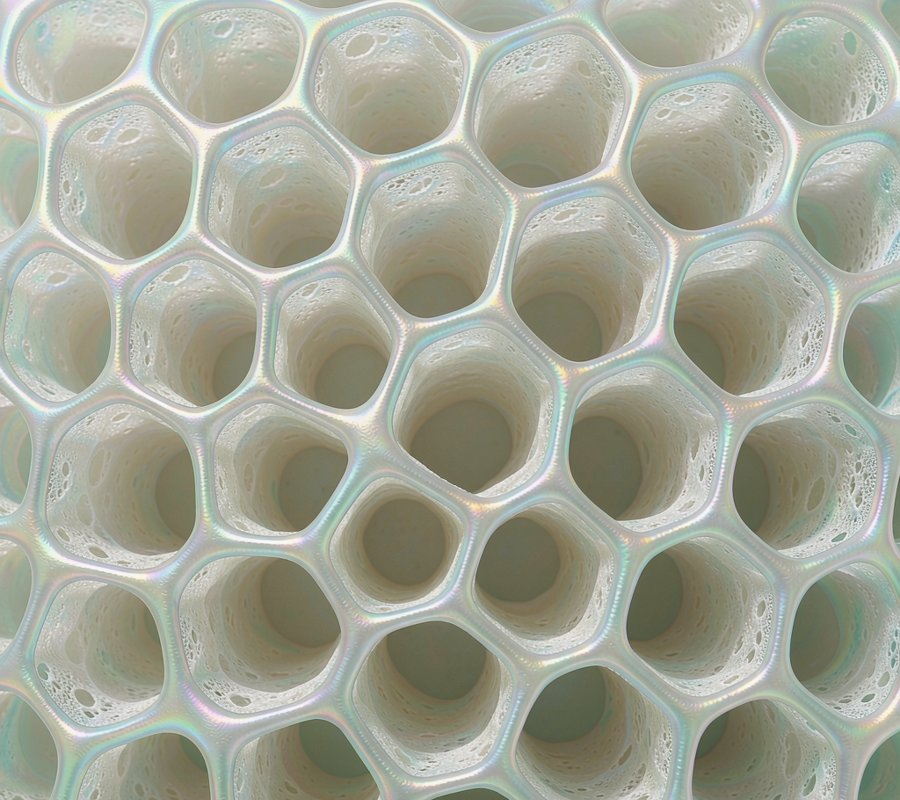
Feedstock economics and molecular design meet in the foam formulation window. (Original illustration)
1. D4 Chain Analysis Puts Feedstock Cost at the Centre of Silicone Oil Economics
1. Summary: A market analysis published on 20 November by GuanYan TianXia, carried by NetEase, examines the D4 (octamethylcyclotetrasiloxane) value chain, the cyclic intermediate that sits at the waist of the silicones industry and feeds silicone rubber, silicone oil, silicone resin and cosmetic additives. D4 is described as a colourless transparent liquid with a boiling point near 175 degrees Celsius. Upstream, metal silicon and chloromethane together account for 60 to 70 percent of D4 production cost, and electricity represents 30 to 40 percent of metal-silicon cost. The analysis quantifies the pass-through: every 1,000 yuan per tonne increase in metal silicon adds roughly 400 to 500 yuan per tonne to D4 cost, based on consumption of 0.45 to 0.5 tonnes of metal silicon per tonne of D4. It cites the 2021 spike, when metal silicon rose from about 12,000 to over 30,000 yuan per tonne and pulled D4 from about 18,000 to a historical high near 40,000 yuan per tonne, before a retreat to 13,000 to 18,000 yuan in 2023 to 2025. Integrated producers with 70 to 100 percent metal-silicon self-sufficiency are said to hold a 2,000 to 4,000 yuan per tonne cost advantage. On the demand side, every one percent growth in silicone rubber adds about 0.6 to 0.7 percent to D4 demand, cosmetic-grade D4 is growing 8 to 10 percent, and lithium-battery, photovoltaic, medical and 5G thermal applications are opening higher-value outlets.
2. Source: NetEase, D4 industry chain analysis by GuanYan TianXia, 20 November 2026. Promotional wording and contact details removed.
3. Editor’s Pick + Reason: The quantified metal-silicon-to-D4 cost pass-through. Reason: It converts a general low-cost narrative into a number a buyer can track, linking the price floor of silicone oils and foam stabilisers directly to power tariffs and metal-silicon self-sufficiency rather than to end-market sentiment alone.
2. Cloud Point and Inverse Solubility Resurface as Core Surfactant Selection Criteria
1. Summary: A technical reference on water-soluble silicone oil sets out why polyether-modified polysiloxanes, the chemistry behind most polyurethane foam stabilisers, behave differently from ordinary silicone oils. Grafting polyether segments onto the polysiloxane backbone yields a non-ionic surfactant with low surface tension and temperature-dependent inverse solubility. Most grades show a cloud point: as temperature rises the clear solution turns turbid and the silicone separates, then re-dissolves on cooling. That phase behaviour is not a defect but part of how the surfactant acts at the foam film and in defoaming. The practical consequence is that selection must start with process temperature: if the cloud point sits below the working temperature, the grade will separate and lose function. Beyond cloud point, the guide lists viscosity, active content, hydrophilic-lipophilic balance and end-group architecture as decisive variables. Whether the polyether is grafted on the side chain or at both ends, and whether ethylene oxide or propylene oxide dominates, determines hydrophilic or lipophilic character and therefore whether a product is built as a foam stabiliser or a defoamer. Two grades can look identical, colourless to pale yellow transparent liquid, yet perform very differently. The guide stresses small-scale trials in the actual system and warns that prolonged high temperature accelerates polyether-chain degradation and odour formation.
2. Source: Qiyes technical encyclopedia entry on water-soluble silicone oil, updated 2026. Promotional wording and contact details removed.
3. Editor’s Pick + Reason: Treating inverse solubility as a selection parameter rather than a product fault. Reason: Cloud point, EO or PO balance and end-group type give formulators a short, testable checklist that explains why a stabiliser grade cannot simply be swapped for a defoamer grade, reducing trial-and-error at the foaming line.

Molecular route and catalyst balance are becoming explicit formulation variables. (Original illustration)
3. Hydrolytic versus Non-Hydrolytic Routes Frame High-Resilience Silicone Oil Substitution
1. Summary: A trade briefing published on 18 November examines how molecular route and cell design are shaping the domestic substitution of high-resilience silicone oils. It distinguishes stabilisers by the bond linking the polysiloxane backbone to the polyether side chain. Hydrolytic types use a silicon-oxygen-carbon linkage with weaker hydrolysis resistance and are generally used in cost-sensitive rigid-foam systems; non-hydrolytic types use a direct silicon-carbon bond, resist hydrolysis, and suit flexible, high-resilience and moulded foam systems that must survive long storage. The briefing points to a domestic non-hydrolytic grade positioned as an alternative to a well-known imported high-resilience reference, recommended for TDI moulded foam, slabstock and TDI/MDI blends at 0.6 to 1.2 parts per hundred polyether. A companion coarse-cell grade targets lower-density high-resilience foam with higher hardness and rebound. For coarse-cell high-resilience and slow-recovery foam, the article recommends tuning the hydrophilic-lipophilic balance of the polyether silicone and introducing long-chain polyether or long-chain alkyl end caps as flexible segments, while avoiding both excessive cell opening and collapse so as to build a thick-wall coarse-cell structure. It pairs this with high-molecular-weight, high-functionality polyether and an amine or tin catalyst balance between gelation and blowing.
2. Source: Qiguang trade briefing of 18 November 2026, citing company high-resilience silicone oil technical data and a 960 Chemical Net study on slow-recovery cushion materials. Contact and promotional details removed.
3. Editor’s Pick + Reason: The silicon-carbon versus silicon-oxygen-carbon distinction. Reason: Hydrolytic stability is a storage-life and export-logistics issue, not a laboratory curiosity; making the bond type the first screening question gives buyers a concrete way to judge whether a domestic substitute is fit for moulded and high-resilience systems.
4. Potassium Oleate Returns to Focus as a Low-Odour Metal-Soap Catalyst for Rigid Foam
1. Summary: A supplier listing updated on 20 November highlights potassium oleate as a metal-soap catalyst for polyurethane foam, particularly polyisocyanurate reaction systems. Chemically the potassium salt of oleic acid, it is supplied in liquid, paste and powder forms across a range of active contents. The listing describes it as compatible with polyester and polyether polyols, other catalysts and blowing agents in combined polyether systems, and positions it as a replacement for organotin catalysts and for tertiary or alkanolamine catalysts in rigid pour and spray applications. The claimed profile is balanced catalysis with high blowing activity, stable performance, fast gelling and low cost, with a light colour and low odour said to suit environmental and export requirements. Potassium oleate belongs to the metal-soap catalyst family, alongside potassium acetate and potassium octoate, widely used to promote the trimerisation reaction that gives PIR foam its fire performance. Its renewed visibility among domestic suppliers reflects continued interest in tin-free and low-emission catalyst packages for rigid insulation, where formulators are balancing regulatory pressure on organotin and volatile amines against processing latitude. Listed dosage and performance figures are supplier claims and require validation in the user’s own formulation before production.
2. Source: China.cn supplier technical listing for potassium oleate, updated 20 November 2026. Prices, telephone numbers and promotional wording removed.
3. Editor’s Pick + Reason: Positioning potassium oleate against both organotin and volatile amines. Reason: It shows that low-emission catalyst work is not limited to reactive amines; a low-odour metal soap that also drives PIR trimerisation offers a second route to rigid-foam compliance, provided gelling and blowing remain balanced.
Compiled 20 November 2026. Illustrations are original, AI-generated, free of third-party licensing claims and free of watermarks. Dates and times refer to GMT+8.