
This edition of the siliconeoil industry brief follows the surfactant and polyurethane additives chain from a next-generation non-PFAS blowing-agent milestone and a major surfactant capacity scale-up to a bio-based polyurethane chemistry breakthrough and the interfacial science of foam stabilisation. Four items are drawn from material published or updated between 9 and 17 November 2026. Supplier advertisements, promotional product listings, quotation pages, telephone numbers, instant-messaging contacts and QR codes have been excluded, and source names appear as plain text.
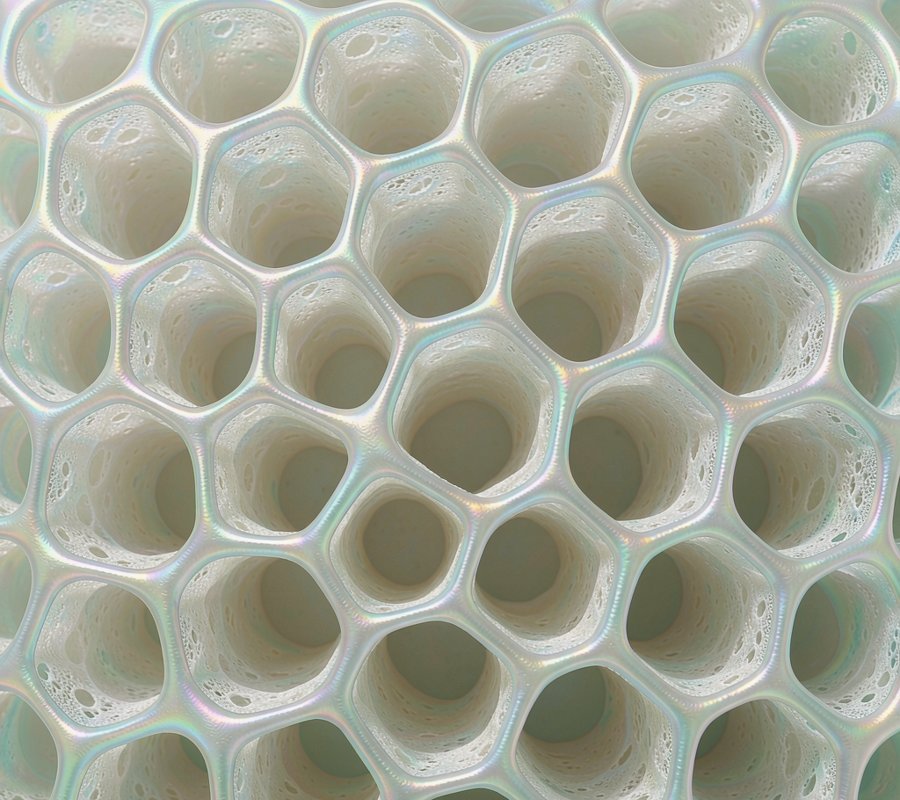
Blowing-agent choice and cell control remain tightly coupled in rigid polyurethane foam. (Original illustration)
1. Solstice Hits a Milestone on a Next-Generation, Non-PFAS Blowing Agent
1. Summary: Solstice Advanced Materials announced on 9 November a key development milestone for its next-generation foam blowing agent, with candidate samples to be supplied to selected global customers from early 2027. The candidate is designed to meet requirements for thermal performance, non-flammability, low global-warming potential and near-zero ozone-depletion potential. Internal assessment indicates it is not classified as a PFAS, does not form trifluoroacetic acid in the atmosphere and does not accumulate in the environment. The company, with more than 300 scientists and engineers and over 5,700 patents and pending applications, will work with selected customers on spray polyurethane foam, appliance insulation, insulation boards and panel applications during the sampling phase. Alongside the new candidate, existing Solstice blowing-agent technology delivers up to 25 percent better insulation in polyisocyanurate board, up to 56 percent in spray polyurethane foam systems and up to 10 percent lower refrigerator energy use compared with hydrocarbon-based agents, according to the company.
2. Source: PU Juyitang (pujyt.com), “Solstice reaches a key development milestone for its next-generation foam blowing agent,” 9 Nov 2026. Company contact and booth details removed.
3. Editor’s Pick + Reason: A non-PFAS, low-GWP blowing agent with a named sampling date rather than an open-ended roadmap. Reason: A fixed 2027 sample window plus quantifiable insulation and energy gains turns a sustainability claim into a testable schedule, and it resets the formulation brief for the rigid-foam silicone surfactants and catalysts that must perform with new blowing agents.
2. Menhover Scales Silicone Surfactant Capacity to 38,000 Tonnes
1. Summary: A PU China 2026 review profiles Shanghai Menhover New Material Technology, which traces its silicone surfactant business from a 1,000-tonne-per-year flexible-foam silicone oil line in 2011 to a designed capacity of 38,000 tonnes per year today, alongside 12,000 tonnes of amine catalysts and 8,000 tonnes of metal catalysts. Founded in 2011 by returnees and polyurethane and silicone specialists, the company runs research and development in Shanghai’s Jinshan district and production in Jinshan and Yongxiu, Jiangxi, across 75,000 square metres, with ISO 9001, ISO 14001, ISO 45001 and EU REACH certification. Its portfolio spans silicone surfactants, amine and metal catalysts, specialty polyols and processing aids across eight application areas: automotive high-resilience, slabstock, slow-rebound, conventional flexible foam, one-component foam, rigid foam, footwear and leather. Product families cover compression-resistant, low-odour and low-volatility grades, flame-retardant silicone oils aligned to United States and United Kingdom standards, open-cell grades for MDI slow-rebound foam and ultra-low-density stabilisers. Organic bismuth and nickel eco-friendly catalysts entered production following research ties formed in 2023.
2. Source: Menhover and industry review of PU China 2026, “From 1,000 tonnes of flexible-foam silicone oil to 38,000 tonnes of capacity,” November 2026. Booth, address and contact details removed.
3. Editor’s Pick + Reason: A surfactant maker bundling silicone oils, catalysts and processing aids into a single eight-sector solution set. Reason: Capacity scale combined with a full additive basket signals a shift from single-product supply to system-level competition, changing how formulators source and validate foam packages.

Bio-based routes and low-emission catalysts are moving upstream into molecular design. (Original illustration)
3. Castor-Oil Emulsifier Lifts Bio-Based Waterborne Polyurethane to 70.94 Percent Renewable Content
1. Summary: Materials scientists report a chemical design route to bio-based waterborne polyurethane coatings reaching 70.94 percent renewable content while retaining water resistance, mechanical flexibility and chemical durability. Conventional waterborne polyurethane dispersions rely on low-molecular-weight ionic chain extenders such as dimethylolpropionic or dimethylolbutanoic acid at more than 6.5 to 8.3 weight percent to disperse hydrophobic backbones, which raises glass transition temperatures to roughly 29 to 37.8 degrees Celsius and leaves cured films prone to moisture uptake. The research team replaced small-molecule extenders with a castor-oil emulsifier made by reacting castor oil, of molecular weight about 933 grams per mole and average hydroxyl functionality 2.7, with 3-mercaptopropionic acid through a photochemical thiol-ene click reaction under a 1,000-watt ultraviolet lamp. They also built four bio-based primary diols from methyl oleate and methyl undecenoate through ester condensation and thiol-ene addition. Dispersion synthesis used a bismuth acid catalyst at 85 degrees Celsius for five hours, neutralisation with triethylamine below 45 degrees Celsius and high-speed dispersion in deionised water to form a stable colloid at 20 percent solids.
2. Source: Scienmag, “Bio-Based Waterborne Polyurethane Coatings Achieve High Water Resistance and Flexibility,” research summary. Author affiliations and contact details removed.
3. Editor’s Pick + Reason: A high renewable-content dispersion that keeps flexibility by eliminating small-molecule ionic extenders. Reason: It resolves a known trade-off between bio-based content and low-temperature performance, and the bismuth-catalysed route ties catalyst choice directly to final film properties.
4. Foam Stabiliser Science Reframes Silicone Surfactants as Interfacial Control Tools
1. Summary: A technical overview of foam stabilisers positions silicone surfactants as interfacial and structure-building auxiliaries rather than bulk additives, controlling nucleation, drainage, cell size and the open-cell versus closed-cell balance in polyurethane and mechanically foamed systems. In polyurethane processing, the organosilicon surfactant family, also called silicone-based foam stabilisers or cell regulators, manages nucleation, cell dimensions and foam rise by lowering surface tension, reinforcing liquid films, raising viscosity and anchoring at the gas-liquid interface. Typical flexible-foam formulations use 1 to 3 parts per hundred of silicone surfactant to stabilise cell formation, while flame-retardant packages and catalysts boost performance but complicate recycling and toxicology management; the mechanism is usually interfacial stabilisation, reaction-rate control or char promotion rather than simple bulk reinforcement. The review traces foam stabilisation from early protein colloids to multifunctional blends that emulsify raw materials, promote nucleation, regulate open and closed cells and prevent collapse during rise and cure. Sustainability pressure is pushing formulators toward low-emission chemistry, reduced fluorine content, selected bio-based and biodegradable stabilisers and better recyclability, with over-stabilisation and compatibility remaining practical challenges.
2. Source: plaswiki technical overviews, “Polyurethane (PU)” and “Foam Stabiliser.” Promotional supplier listings removed.
3. Editor’s Pick + Reason: A mechanism-led view of what silicone surfactants actually do at the gas-liquid interface. Reason: Reframing stabilisers as interfacial tools, with a stated 1 to 3 parts-per-hundred window and clear failure modes, gives formulators a practical diagnostic frame rather than a product list, and it ties directly to the low-fluorine and bio-based trends reshaping the category.
Compiled 19 November 2026. Illustrations are original, AI-generated, free of third-party licensing claims and free of watermarks. Dates and times refer to GMT+8.