
This afternoon edition of the siliconeoil industry brief follows the surfactant and polyurethane additives chain from a split price board and an overseas capacity reshuffle to a bismuth-catalysed silicone composite study and a closed-cell flame-retardant silicone foam for electric-vehicle batteries. Four items are drawn from material published or updated between 4 and 18 November 2026, with the newest market data dated 13 November. Supplier advertisements, promotional product listings, quotation pages, telephone numbers, instant-messaging contacts and QR codes have been excluded, and source names appear as plain text.
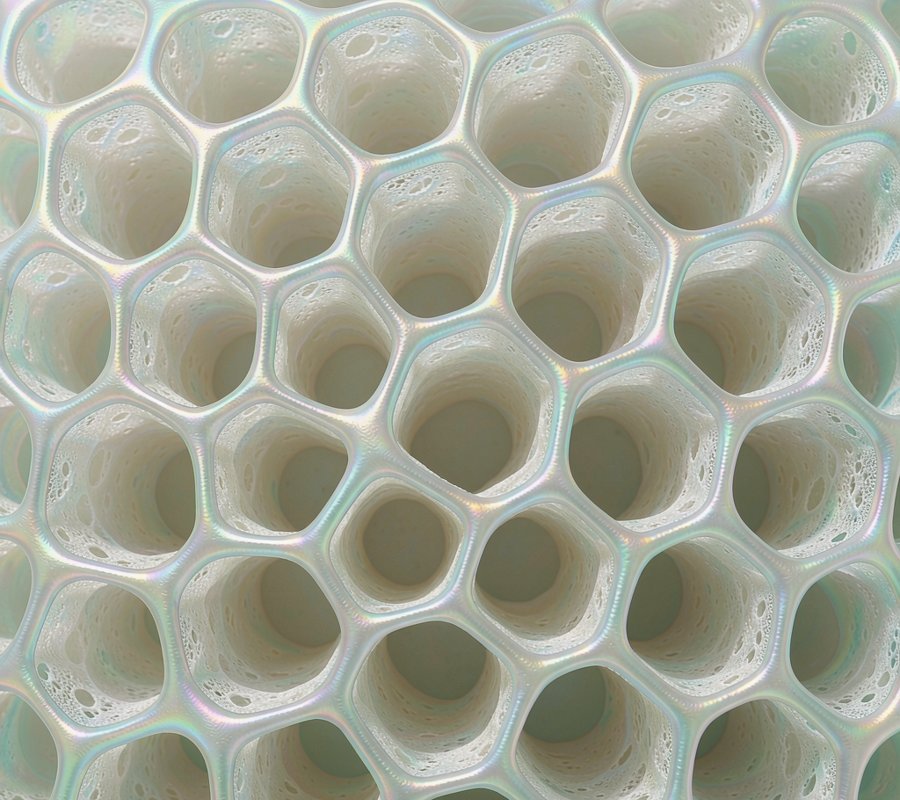
Cell control remains the core function of silicone surfactants in flexible and rigid foam. (Original illustration)
1. Additive Price Board Splits as Overseas Silicone Capacity Reshuffles
1. Summary: A polyurethane additives price board dated 13 November describes amine blowing catalysts as one of the firmer segments of an otherwise soft auxiliary market. Solid triethylenediamine at 99.5 percent purity is quoted at 35,000 to 45,000 yuan per tonne, di-n-butylamine at 14,000 to 20,000 yuan per tonne, and A33 liquid or solid amine formulations at 16.9 to 100 yuan per kilogram. Silicone surfactants, by contrast, are deflating: dimethyl silicone oil runs at 15,000 to 17,000 yuan per tonne and monomer offers have fallen to about 13,800 yuan per tonne. Organotin catalysts stay firm, with stannous octoate T-9 at 95 to 96 yuan per kilogram. On capacity, Anhui Hengguang is reported at 3,000 tonnes per year of amine catalyst with an upgrade adding a further 3,000 tonnes, while a combined organotin and specialty amine expansion adds roughly 32,300 tonnes per year. Overseas restructuring is the counterweight: Dow’s Barry site in the United Kingdom enters a phased shutdown from November, while Evonik expands its Essen organosilicon units. For nitrogen chemistry, value sits with DABCO-family tertiary amines serving foam blow and gel catalysis as well as epoxy acceleration, imidazole accelerators and strong amidine bases such as DBU for mid-temperature and latent cure, and tetramethylguanidine increasingly cited as a lower-cost DBU substitute in foam catalysis.
2. Source: Polyurethane additives price board and market analysis dated 13 Nov 2026 (amine.com.cn); China Polyurethane Industry Association isocyanate committee and Kente Catalysis investor record, 11 Nov 2026. Quotations are indicative and supplier contacts removed.
3. Editor’s Pick + Reason: The divergence between firm amine catalysts and deflating silicone surfactants, set against a Western silicone capacity exit. Reason: A price split plus a real plant closure changes sourcing economics more directly than a product launch, and it signals where margin and supply risk are concentrating in the additive chain.
2. Bismuth-Catalysed Silicone Composites Enable Two-Way Thermal Tuning
1. Summary: A study published online in ACS Omega on 4 November reports multifunctional polydimethylsiloxane composites made with a bismuth carboxylate catalyst and two structurally different fillers, perlite and hollow glass microspheres, to map structure-processing-property relationships for scalable production. Bismuth systems are emerging as eco-friendly alternatives to conventional tin- and platinum-based catalysts, but their behaviour in highly filled formulations has been less clear. Rheology showed that filler loading shifts the gel point substantially: gelation temperature rises from about 105 degrees Celsius for neat PDMS to roughly 155 degrees with 40 percent perlite and about 162 degrees with 40 percent microspheres, extending the processing window by 50 to 57 degrees. Filler morphology then governs thermal behaviour in opposite directions. Perlite lifts through-thickness conductivity by up to 42 percent, from 0.193 to 0.274 watts per metre-kelvin, while hollow glass microspheres cut it by 47 percent to 0.102. Coefficient of thermal expansion falls by 43 percent with perlite and 74 percent with microspheres. The result is a single bismuth-catalysed platform able to tune thermal transport either up or down by filler choice.
2. Source: ACS Omega, “Bismuth-Catalyzed Multifunctional Polydimethylsiloxane Composites with Tunable Thermomechanical Properties for Scalable Manufacturing”, published online 4 Nov 2026, DOI 10.1021/acsomega.6c09399.
3. Editor’s Pick + Reason: Holding one catalyst platform and steering conductivity in either direction simply by switching filler. Reason: Bidirectional thermal tuning plus a longer, higher-temperature processing window addresses two design constraints at once, and the bismuth route also removes tin and platinum from the cure chemistry.
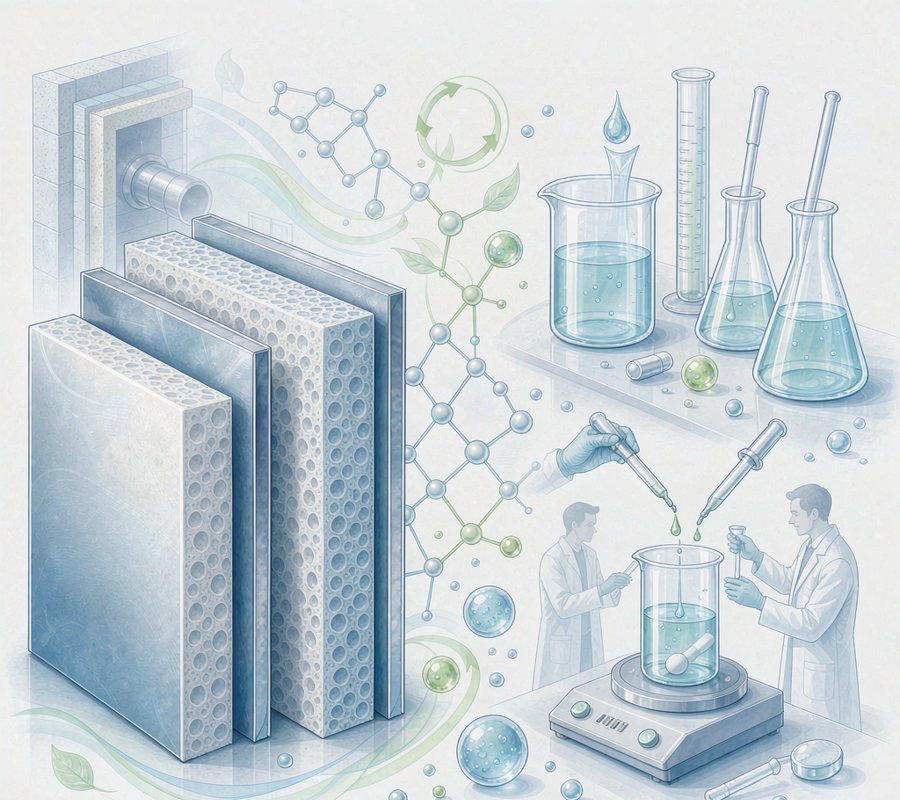
Low-emission catalysts and flame-retardant packages are moving into joint validation. (Original illustration)
3. Closed-Cell Flame-Retardant Silicone Foam Targets EV Battery Packs
1. Summary: CHT Group has introduced SilSo Lite 21025, a two-part, room-temperature platinum-cure, self-blowing silicone foam that forms a closed-cell structure for electric-vehicle battery applications. The product is positioned to cut weight while mitigating thermal runaway and protecting electronic components and battery packs from moisture, debris, vibration and shock, and it is presented as suitable where low smoke, low flame and low toxicity are required. Supplied as a liquid system with a one-to-one mix ratio and low viscosity, it can be dispensed by cartridge or automated mixing equipment. A fast gel time is intended to raise line throughput, and the foam bonds to a range of substrates without primer, with stronger adhesion available through recommended primers. It expands to two to three times its liquid volume and reaches full cure in about ten minutes. The company cites excellent flame retardancy to help manage thermal runaway events, with independent testing under way to certify a UL 94 V-0 rating.
2. Source: US Tech Online, “CHT Group Develops New Silicone Foam”, SilSo Lite 21025 product announcement. Contact and booth details removed.
3. Editor’s Pick + Reason: Pairing a closed-cell structure with low-smoke, low-toxicity flame retardancy in a fast-cure, one-to-one system. Reason: Battery enclosures reward short cure cycles and primerless adhesion, and tying these to a named flame rating under certification makes the claim testable rather than promotional.
4. Tin-Free Metal Catalysts and Reactive Amines Take the Compliance Route
1. Summary: Technical guidance published in mid-November sets out how tin-free metal catalysts and reactive low-emission amines are replacing legacy systems under EU REACH and RoHS pressure. Traditional organotin catalysts such as DBTDL and T-12 and organic lead driers are being phased out over toxicity concerns, with DBTDL listed as a substance of very high concern. Bismuth and zinc organometallic composites are offered as drop-in alternatives: bismuth selectively drives the NCO-polyol reaction while suppressing the isocyanate-water side reaction, reducing carbon dioxide bubbles and pinholes, and pairing fast bismuth with zinc extends open time before rapid full cure, including at low winter temperatures. Such systems are described as free of organotin, heavy metals, volatile organic compounds and halogens. In parallel, reactive low-VOC amines carrying hydroxyl or amino groups can bond into the polymer network, cutting free-amine emissions and fogging for automotive interior and high-resilience foam; their active hydrogen must be counted into the NCO equivalent. Suppliers caution that metal-free and organotin catalysts are not equal in activity or hydrolysis resistance, so direct one-for-one substitution is unsafe.
2. Source: Ruike Chemical technical article on eco-friendly catalyst solutions, rk-chem.com; polyurethane core additives selection handbook, Nov 2026. Product codes, quotations and contacts removed.
3. Editor’s Pick + Reason: The warning that “tin-free” is not the same as “drop-in equal”, alongside reactive amines that chemically lock into the network. Reason: Compliance claims are only useful if the formulation is re-qualified; naming activity, hydrolysis resistance and NCO-equivalent effects gives formulators a concrete re-validation checklist.
Compiled 18 November 2026. Illustrations are original, AI-generated, free of third-party licensing claims and free of watermarks. Dates and times refer to GMT+8.