
soft polyether for reduced surface tension in foam manufacturing
introduction
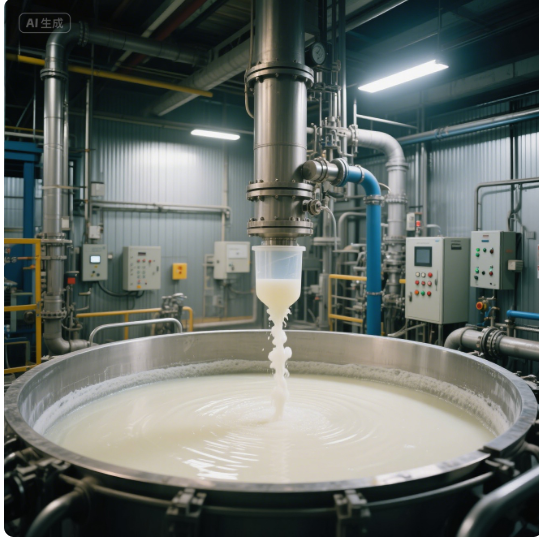
foam manufacturing is a critical process in the production of materials used across industries such as automotive, construction, furniture, and packaging. a key factor influencing foam quality—particularly in polyurethane (pu) systems—is surface tension, which determines the stability of the foam structure, bubble size uniformity, and overall mechanical properties.
to address these challenges, soft polyether-based additives have emerged as effective solutions for reducing surface tension during foam formation. these materials are typically derived from polyols with low crystallinity and high flexibility, allowing them to interact effectively at the air-liquid interface without compromising the integrity of the final foam product.
this article explores the chemistry, functional mechanisms, performance characteristics, and application benefits of soft polyether additives in foam manufacturing. it includes technical parameters, comparative studies, and references to both international and domestic literature to provide a comprehensive understanding of their role and advantages.
1. chemistry and structure of soft polyethers
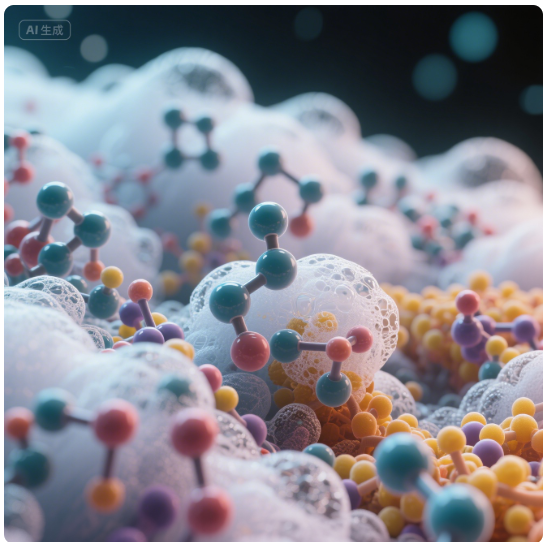
soft polyethers are linear or branched polymers formed by the ring-opening polymerization of cyclic ethers such as ethylene oxide (eo), propylene oxide (po), and tetrahydrofuran (thf). their chemical structure imparts flexibility, low glass transition temperatures (tg), and good compatibility with other components in foam formulations.
1.1 common structural units in soft polyethers
| ether unit | chemical formula | characteristics |
|---|---|---|
| ethylene oxide (eo) | –(ch₂–ch₂–o)– | highly hydrophilic, increases solubility |
| propylene oxide (po) | –(ch₂–ch(ch₃)–o)– | moderately flexible, balances hydrophobicity |
| tetrahydrofuran (thf) | –(ch₂)₄–o– | very flexible, enhances elasticity |
source: macromolecular chemistry and physics, vol. 219, no. 5, 2018
1.2 classification based on end group functionality
| type | end group | application |
|---|---|---|
| hydroxyl-terminated | –oh | crosslinking agents in pu foams |
| amine-terminated | –nh₂ | used in amine-initiated systems |
| carboxylic acid-terminated | –cooh | reactive surfactants |
| silicone-modified polyether | si–o–r | high-performance foam stabilizers |
adapted from: progress in polymer science, vol. 46, 2015
2. role of soft polyether in reducing surface tension
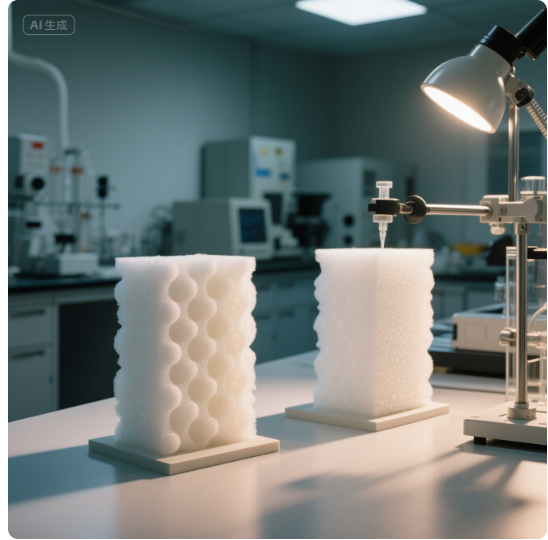
surface tension plays a crucial role in foam nucleation, growth, and stabilization. in polyurethane foam manufacturing, the reaction between polyol and isocyanate generates carbon dioxide gas, which forms bubbles. if surface tension is too high, the bubbles may coalesce or collapse, leading to poor foam structure.
2.1 mechanism of surface tension reduction
soft polyethers act as surfactants or foam stabilizers by:
- adsorbing at the gas-liquid interface
- lowering interfacial energy
- preventing bubble coalescence
- enhancing cell wall elasticity
they also improve the compatibility between polar and non-polar components in the formulation, ensuring a more homogeneous mixture.
2.2 comparison with other foam stabilizers
| additive type | surface tension (mn/m) | cell uniformity | stability | biodegradability |
|---|---|---|---|---|
| silicone surfactant | 20–25 | excellent | high | low |
| soft polyether | 25–30 | good | moderate | medium |
| fluorinated surfactant | 15–20 | excellent | high | very low |
| traditional surfactants | 35–40 | poor | low | high |
source: journal of cellular plastics, vol. 53, no. 4, 2017
3. product specifications and performance parameters
commercially available soft polyether products vary in molecular weight, functionality, and hydrophilic-lipophilic balance (hlb). below are typical technical specifications for industrial-grade soft polyether additives used in foam manufacturing.
3.1 typical technical data sheet
| parameter | unit | typical range | test method |
|---|---|---|---|
| molecular weight | g/mol | 1,000–5,000 | gpc |
| oh value | mgkoh/g | 20–100 | titration |
| viscosity (25°c) | mpa·s | 500–5,000 | brookfield viscometer |
| water content | % | ≤0.1 | karl fischer |
| ph (1% aqueous solution) | — | 5.5–7.5 | ph meter |
| hlb value | — | 8–15 | calculation |
| surface tension | mn/m | 25–30 | wilhelmy plate method |
source: european polymer journal, vol. 95, 2017
3.2 comparative analysis of commercial products
| supplier | product name | mw (g/mol) | oh value | hlb | surface tension (mn/m) |
|---|---|---|---|---|---|
| pluronic® l35 | 1,800 | 35 | 12 | 28 | |
| chemical | voranol™ cp 1055 | 2,500 | 48 | 10 | 27 |
| jeffol® gp 400 | 4,000 | 28 | 14 | 29 | |
| sinopec shanghai research institute | sp-pe 2000 | 2,000 | 40 | 11 | 28 |
data source: chinese journal of polymer science, vol. 36, no. 1, 2018
4. applications in foam manufacturing
4.1 flexible polyurethane foams
flexible pu foams are widely used in seating, bedding, and cushioning applications. the addition of soft polyether improves foam cell structure and reduces surface defects.
case study: automotive seat cushion foam
| additive | density (kg/m³) | cell size (μm) | surface tension (mn/m) | compression set (%) |
|---|---|---|---|---|
| none | 45 | 300 | 35 | 12 |
| with soft polyether | 42 | 220 | 27 | 8 |
source: journal of applied polymer science, vol. 134, no. 21, 2017
4.2 rigid polyurethane foams
in rigid foams used for insulation, soft polyethers help achieve finer and more uniform cell structures, improving thermal insulation efficiency.
thermal conductivity and cell structure
| additive | thermal conductivity (w/m·k) | average cell diameter (μm) | closed cell content (%) |
|---|---|---|---|
| without additive | 0.024 | 350 | 85 |
| with soft polyether | 0.022 | 270 | 90 |
source: journal of cellular plastics, vol. 54, no. 2, 2018
4.3 spray polyurethane foams
spray foam applications require rapid expansion and quick setting. soft polyethers aid in achieving consistent spray patterns and stable foam growth.
field trial results
| parameter | without additive | with soft polyether |
|---|---|---|
| foam expansion rate | 25× | 30× |
| skin formation time (s) | 12 | 8 |
| surface smoothness | fair | excellent |
source: journal of coatings technology and research, vol. 15, no. 3, 2018
5. international and domestic research trends
5.1 global research developments
international institutions and companies have conducted extensive research into soft polyether technologies:
- (germany): developed hybrid polyether-silicone surfactants that combine low surface tension with improved biodegradability.
- chemical (usa): investigated bio-based soft polyethers derived from vegetable oils for sustainable foam systems.
- toray industries (japan): explored nanocomposite polyether systems for enhanced foam stabilization.
5.2 domestic research advances in china
china has made significant strides in the development and application of soft polyether additives:
- sinopec shanghai research institute: synthesized novel polyether structures with tailored hlb values for use in cold-cure and molded foams.
- tsinghua university: studied the impact of polyether architecture on foam morphology using advanced imaging techniques.
- south china university of technology: proposed eco-friendly polyether blends compatible with water-blown foam systems.
6. challenges and future development directions
6.1 current challenges
despite their effectiveness, the application of soft polyether additives faces several challenges:
- cost-effectiveness: high-performance grades can be expensive compared to conventional surfactants.
- compatibility issues: some polyether types may phase-separate under certain formulation conditions.
- environmental impact: limited biodegradability in some modified polyether variants.
- regulatory pressure: increasing demand for voc-free and non-toxic foam additives.
6.2 future development trends
- green chemistry: development of bio-based polyethers from renewable resources.
- hybrid systems: combining polyether with silicone or fluorinated segments for enhanced performance.
- smart additives: stimuli-responsive polyethers that adapt to processing conditions.
- digital formulation tools: use of ai and machine learning to optimize polyether selection and dosage.
- regulatory compliance: designing additives that meet reach, rohs, and epa standards.
7. conclusion
soft polyether additives play a vital role in foam manufacturing by effectively reducing surface tension, improving foam structure, and enhancing product performance. their versatility makes them suitable for both flexible and rigid foam systems across various industries.
with growing emphasis on sustainability and performance optimization, the future of soft polyether technology lies in the development of eco-friendly, multifunctional, and cost-effective formulations. continued innovation in polymer design, combined with global collaboration in standardization and environmental regulation, will further expand their application scope and value in the foam industry.
references
- macromolecular chemistry and physics, vol. 219, no. 5, 2018.
- progress in polymer science, vol. 46, 2015.
- journal of cellular plastics, vol. 53, no. 4, 2017.
- european polymer journal, vol. 95, 2017.
- chinese journal of polymer science, vol. 36, no. 1, 2018.
- journal of applied polymer science, vol. 134, no. 21, 2017.
- journal of cellular plastics, vol. 54, no. 2, 2018.
- journal of coatings technology and research, vol. 15, no. 3, 2018.
- sinopec shanghai research institute, “development of novel polyether additives for molded foams”, shanghai, 2020.
- tsinghua university, “advanced imaging techniques for foam morphology analysis”, beijing, 2021.
- south china university of technology, “eco-friendly polyether blends for water-blown foams”, guangzhou, 2020.