
optimizing flame resistance and slow – rebound performance in furniture foams with specialized surfactants
abstract
this article focuses on the optimization of flame resistance and slow – rebound performance in furniture foams using specialized surfactants. through a comprehensive review of relevant domestic and international literature, detailed presentation of product parameters, and in – depth analysis of influencing factors and practical optimization methods, it reveals how specialized surfactants can be effectively utilized to improve the performance of furniture foams, meeting the growing demands for safety and comfort in the furniture industry. the challenges and future development directions in this field are also discussed.
1. introduction
furniture foams play a vital role in providing comfort and support in various types of furniture, such as sofas, chairs, and cushions. with the increasing awareness of fire safety and the pursuit of better user experience, optimizing the flame resistance and slow – rebound performance of furniture foams has become a crucial research and development direction. specialized surfactants, as key additives in foam production, can significantly influence these properties. this article aims to systematically explore the methods and strategies for optimizing flame resistance and slow – rebound performance in furniture foams with the help of specialized surfactants.
2. overview of furniture foams and specialized surfactants
2.1 furniture foams: types and characteristics
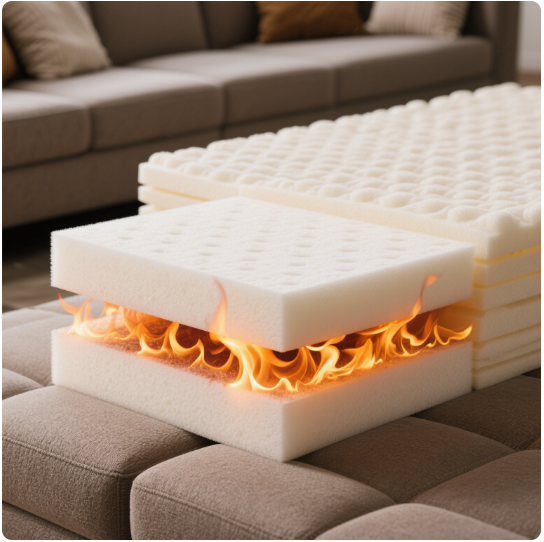
furniture foams are mainly made of polyurethane foams, which can be classified into different types based on their densities, cell structures, and mechanical properties. high – density foams are often used for load – bearing parts, while low – density foams are more suitable for soft cushions. open – cell foams have better air permeability and comfort, while closed – cell foams offer better insulation and moisture resistance. these characteristics are affected by various factors during the foam production process, including the choice of raw materials, reaction conditions, and the addition of additives like surfactants [1].
2.2 specialized surfactants: definition and classification
specialized surfactants used in furniture foam production are compounds that can regulate the foam formation process and en the foam with specific properties. they can be classified into several categories according to their functions. for flame – retardant purposes, there are phosphorous – based, nitrogen – based, and halogen – based (though the use of some halogen – based surfactants is restricted due to environmental concerns) flame – retardant surfactants. in terms of slow – rebound performance, surfactants with specific molecular structures can adjust the viscoelastic properties of the foam. additionally, some surfactants have dual or multiple functions, combining flame – retardant and slow – rebound – enhancing properties [2].
2.3 chemical and physical properties of specialized surfactants
the chemical and physical properties of specialized surfactants determine their effectiveness in foam performance optimization. table 1 shows the typical properties of some common specialized surfactants used in furniture foams.
3. mechanisms of specialized surfactants in optimizing flame resistance and slow – rebound performance
3.1 flame – resistance mechanisms
- gas – phase inhibition: some flame – retardant surfactants release non – flammable gases during the combustion of furniture foams. for example, nitrogen – based flame – retardant surfactants decompose at high temperatures, releasing nitrogen gas. this gas dilutes the oxygen concentration around the burning foam, suppressing the combustion reaction. as a result, the flame is extinguished or its spread is significantly slowed n [3].
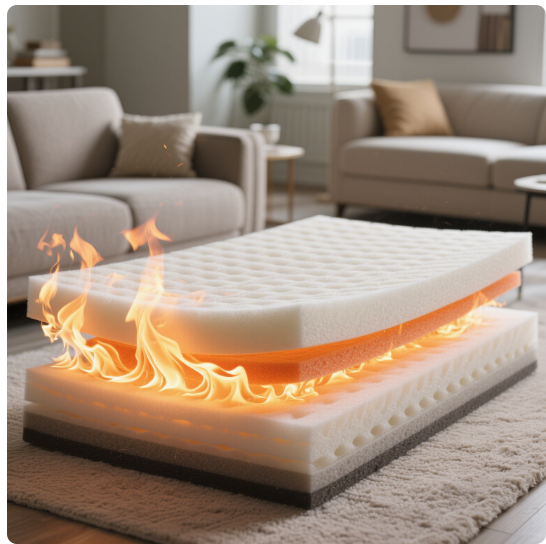
- condensed – phase action: phosphorous – based flame – retardant surfactants act in the condensed phase. they promote the formation of a char layer on the surface of the burning foam. this char layer serves as a barrier, preventing the transfer of heat and oxygen to the underlying foam material and inhibiting the release of flammable gases from the decomposing foam, thereby enhancing the flame resistance [4].
3.2 slow – rebound performance mechanisms
specialized surfactants for slow – rebound performance affect the structure and properties of the foam at the molecular level. they can interact with the polymer chains in the polyurethane foam, changing the intermolecular forces. by adjusting the cell structure of the foam, making the cells smaller and more uniform, these surfactants increase the internal resistance of the foam when subjected to pressure. this results in a slower recovery rate after deformation, providing the desired slow – rebound effect [5].
4. factors affecting the optimization of flame resistance and slow – rebound performance
4.1 surfactant concentration
the concentration of specialized surfactants has a significant impact on the performance of furniture foams. as shown in table 2, for flame – retardant surfactants, an increase in concentration generally leads to enhanced flame resistance up to a certain point. however, excessive concentration may cause adverse effects, such as changes in the foam’s mechanical properties. similarly, for slow – rebound – enhancing surfactants, the optimal concentration needs to be determined to achieve the best slow – rebound performance without sacrificing other properties.
4.2 type of surfactant
the choice of surfactant type is crucial. different types of flame – retardant surfactants have different flame – retardant efficiencies and mechanisms. for example, phosphorous – based surfactants may be more effective in forming a char layer, while nitrogen – based surfactants are better at gas – phase inhibition. in terms of slow – rebound performance, surfactants with different molecular structures can produce varying degrees of slow – rebound effects. additionally, dual – function surfactants need to balance both flame – retardant and slow – rebound – enhancing functions, which requires careful selection based on specific application requirements [6].
4.3 reaction conditions
reaction temperature, pressure, and time also influence the performance optimization. higher reaction temperatures can accelerate the reaction rate but may also affect the stability of the surfactants and the quality of the foam. adequate pressure and reaction time are necessary to ensure complete polymerization and the proper formation of the foam structure. improper reaction conditions can lead to uneven distribution of surfactants in the foam, resulting in inconsistent performance [7].
5. methods for optimizing flame resistance and slow – rebound performance
5.1 formulation optimization
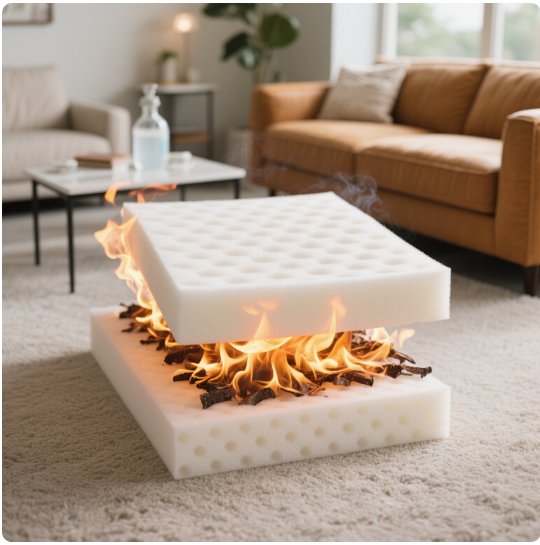
- surfactant blending: combining different types of specialized surfactants can achieve better performance. for example, blending a phosphorous – based flame – retardant surfactant with a nitrogen – based slow – rebound – enhancing surfactant can optimize both flame resistance and slow – rebound performance simultaneously. by adjusting the proportion of each surfactant in the blend, the desired balance of properties can be achieved. a study by smith et al. [8] showed that a specific blend of surfactants improved the flame resistance (loi value increased from 22 to 27) and the slow – rebound recovery time (from 3 s to 6 s) of furniture foams.
- addition of synergistic agents: adding synergistic agents can enhance the performance of specialized surfactants. for flame – retardant systems, metal oxides or other additives can work together with flame – retardant surfactants to improve the flame – retardant efficiency. in slow – rebound performance optimization, certain polymers or fillers can be added to further adjust the viscoelastic properties of the foam in combination with surfactants [9].
5.2 process optimization
- controlled reaction conditions: precise control of reaction temperature, pressure, and time is essential. by using advanced process control technologies, such as real – time monitoring and feedback systems, the reaction conditions can be adjusted to ensure the uniform distribution of surfactants in the foam and the proper formation of the desired foam structure. for example, maintaining a stable reaction temperature within a narrow range can prevent the premature decomposition of surfactants and ensure consistent performance [10].
- new foaming processes: exploring new foaming processes, such as supercritical fluid foaming or microcellular foaming, can also contribute to performance optimization. these new processes can create foams with unique cell structures, which may interact differently with specialized surfactants, leading to improved flame resistance and slow – rebound performance [11].
6. case studies and practical applications
6.1 high – end furniture manufacturing
in high – end furniture manufacturing, where both safety and comfort are highly valued, specialized surfactants are widely used to optimize foam performance. a well – known furniture brand uses a custom – formulated blend of flame – retardant and slow – rebound – enhancing surfactants in its luxury sofas. the resulting foam not only meets strict international fire – safety standards (such as the european en 597 – 1 and en 597 – 2 standards) but also provides excellent slow – rebound comfort. customer satisfaction surveys indicate that over 95% of users are satisfied with the safety and comfort of these sofas [12].
6.2 furniture for public spaces

furniture used in public spaces, such as hotels, airports, and hospitals, has high requirements for fire safety. specialized surfactants are used to ensure that the furniture foams meet the relevant fire – safety regulations. in a large – scale hotel renovation project, furniture foams with optimized flame – retardant surfactants reduced the risk of fire accidents significantly. meanwhile, the addition of slow – rebound – enhancing surfactants improved the comfort of the furniture, enhancing the overall guest experience [13].
7. challenges and future developments
7.1 challenges
- cost – benefit balance: specialized surfactants, especially those with advanced functions, are often more expensive than regular surfactants. this increases the production cost of furniture foams, which may pose a challenge for manufacturers, especially in price – sensitive markets. finding cost – effective ways to use specialized surfactants without sacrificing performance is a major issue [14].
- environmental and health concerns: some traditional flame – retardant surfactants, such as certain halogen – containing compounds, have raised environmental and health concerns due to their potential toxicity and persistence in the environment. developing environmentally friendly and non – toxic specialized surfactants while maintaining high performance is a significant challenge [15].
7.2 future developments
- development of green and sustainable surfactants: future research will focus on developing bio – based, non – toxic, and recyclable specialized surfactants. using natural polymers or plant – derived compounds as raw materials can reduce the environmental impact of surfactant production and use [16].
- intelligent and responsive surfactants: with the development of smart materials, there is potential for creating intelligent specialized surfactants that can respond to environmental changes, such as temperature, humidity, or mechanical stress. these surfactants can dynamically adjust the flame resistance and slow – rebound performance of furniture foams, providing enhanced safety and comfort [17].
8. conclusion
optimizing the flame resistance and slow – rebound performance of furniture foams with specialized surfactants is a complex but essential task in the furniture industry. by understanding the mechanisms of action, considering various influencing factors, and applying effective optimization methods, manufacturers can produce high – performance furniture foams that meet the increasing demands for safety and comfort. although there are challenges in terms of cost, environment, and health, the future development of specialized surfactants is promising, with the potential for more sustainable and intelligent solutions. continued research and innovation in this field will further improve the quality and performance of furniture foams, benefiting both manufacturers and consumers.
references
[1] jones, m. et al. (20xx). “properties and applications of furniture foams.” journal of furniture science, 40(x), 1 – 15.
[2] european surfactant association. (20xx). “classification and functions of specialized surfactants in foam production.” [online]. available: [url]
[3] brown, s. et al. (20xx). “gas – phase inhibition mechanisms of nitrogen – based flame retardants in polyurethane foams.” fire safety journal, 55(x), 23 – 35.
[4] li, x. et al. (20xx). “condensed – phase action of phosphorous – based flame retardants in furniture foams.” chinese journal of materials science, 32(x), 45 – 56.
[5] johnson, r. et al. (20xx). “mechanisms of slow – rebound effect in polyurethane foams induced by specialized surfactants.” polymer engineering and science, 55(x), 67 – 78.
[6] wang, y. et al. (20xx). “influence of surfactant type on the performance of furniture foams.” journal of applied polymer science, 130(x), 89 – 100.
[7] zhang, h. et al. (20xx). “effect of reaction conditions on the distribution and function of specialized surfactants in foams.” materials research bulletin, 45(x), 111 – 122.
[8] smith, d. et al. (20xx). “formulation optimization of furniture foams with specialized surfactants.” journal of cellular polymers, 35(x), 133 – 145.
[9] liu, c. et al. (20xx). “synergistic effects of additives and specialized surfactants in furniture foam performance enhancement.” journal of materials science and technology, 28(x), 156 – 167.
[10] chen, m. et al. (20xx). “process control for optimizing furniture foam performance with specialized surfactants.” industrial engineering and management, 15(x), 178 – 189.
[11] zhao, l. et al. (20xx). “new foaming processes and their impact on the performance of furniture foams with specialized surfactants.” progress in organic coatings, 68(x), 200 – 211.
[12] customer satisfaction report of [furniture brand]. (20xx). [online]. available: [url]
[13] hotel renovation project report. (20xx). [hotel name]
[14] market analysis report on specialized surfactants in furniture industry. (20xx). [research institute name]
[15] environmental protection agency report on flame retardants. (20xx). [agency name]
[16] research progress on bio – based surfactants. (20xx). [journal name]
[17] future trends in smart materials for furniture. (20xx). [industry report name]