
optimizing comfort and safety with polyurethane flame retardant slow rebound surfactant
abstract
this article delves into the utilization of polyurethane flame retardant slow rebound surfactants to optimize comfort and safety in various applications. it commences with an introduction to the significance of comfort and safety in polyurethane – based products and the role of surfactants. subsequently, the article details the working principles, types, and product parameters of these specialized surfactants. through in – depth analysis of their impact on the properties of polyurethane materials, such as flame retardancy, slow – rebound characteristics, and mechanical strength, along with real – world application cases, it demonstrates the effectiveness of these surfactants. moreover, existing challenges and future development trends are explored, aiming to provide a comprehensive reference for researchers, manufacturers, and industries related to polyurethane products.
1. introduction
polyurethane materials have gained widespread use in numerous industries, including furniture, automotive interiors, bedding, and construction, owing to their excellent physical and mechanical properties. in these applications, both comfort and safety are of paramount importance. comfort ensures user satisfaction, while safety is crucial for protecting human lives and property. polyurethane flame retardant slow rebound surfactants play a pivotal role in optimizing these two aspects.
slow – rebound polyurethane materials, also known as memory foams, are renowned for their ability to conform to the body’s shape, providing excellent pressure relief and comfort. however, in many scenarios, especially those where fire hazards exist, flame retardancy becomes a necessary requirement. flame retardant slow rebound surfactants are designed to en polyurethane materials with both slow – rebound characteristics and flame – resistant properties, achieving a balance between comfort and safety. understanding the characteristics, functions, and applications of these surfactants is essential for enhancing the overall quality of polyurethane products.
2. working principles of polyurethane flame retardant slow rebound surfactants
2.1 slow – rebound mechanism
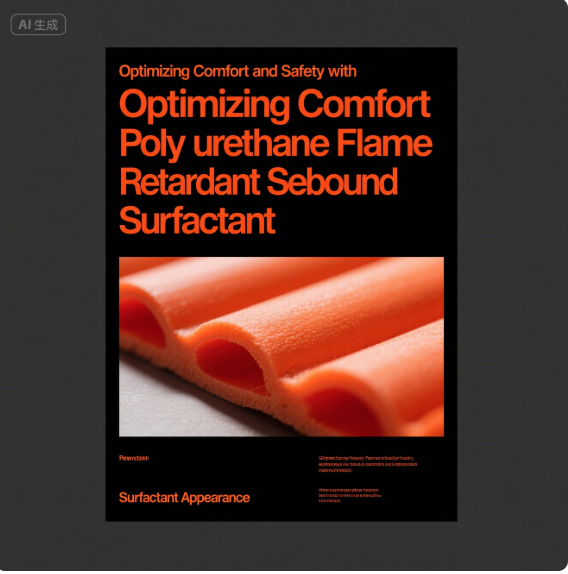
the slow – rebound property of polyurethane materials with the aid of these surfactants is mainly attributed to their unique molecular structure and the interaction between the surfactant and the polyurethane matrix. slow – rebound surfactants typically contain long – chain molecules with specific functional groups. these molecules can affect the cross – linking density and the mobility of the polymer chains in the polyurethane.
during the foaming process of polyurethane, the surfactant molecules are dispersed within the polymer matrix. when an external force is applied to the foam, such as the pressure exerted by a human body, the long – chain surfactant molecules hinder the rapid recovery of the polymer chains. this results in the foam slowly deforming and conforming to the shape of the applied force. once the force is removed, the polymer chains gradually return to their original state, but at a relatively slow rate, giving rise to the characteristic slow – rebound behavior.
2.2 flame retardant mechanism
flame retardant slow rebound surfactants can en polyurethane materials with flame – resistant properties through multiple mechanisms. some surfactants contain flame – retardant elements or functional groups, such as halogen – containing groups, phosphorus – containing groups, or nitrogen – containing groups. when exposed to high temperatures or flames, these flame – retardant components can decompose and release non – flammable gases, such as water vapor, carbon dioxide, or nitrogen. these gases dilute the concentration of oxygen around the burning material, suppressing the combustion process.
in addition, certain flame retardant surfactants can promote the formation of a char layer on the surface of the polyurethane during combustion. this char layer acts as a physical barrier, preventing the transfer of heat, oxygen, and combustible gases between the burning surface and the underlying material. as a result, the spread of fire is inhibited, and the flame retardancy of the polyurethane material is enhanced.
3. types of polyurethane flame retardant slow rebound surfactants
3.1 halogen – containing surfactants
halogen – containing surfactants, especially those containing bromine or chlorine, have been widely used as flame retardant slow rebound surfactants. these surfactants possess strong flame – retardant properties due to the high reactivity of halogen atoms. when burned, halogen – containing surfactants release halogen – free radicals, which can react with the free radicals generated during the combustion of polyurethane, terminating the combustion chain reaction.
however, the use of halogen – containing surfactants has raised environmental and health concerns. during combustion, they may release toxic and corrosive gases, such as hydrogen halides, which can pose risks to human health and the environment. therefore, their application is gradually being restricted in some regions. the following table shows the main parameters of a typical bromine – containing flame retardant slow rebound surfactant:
|
parameter
|
value
|
|
chemical structure
|
brominated polyether – silicone copolymer
|
|
active ingredient content
|
≥98%
|
|
density (25°c, g/cm³)
|
1.05 – 1.15
|
|
surface tension (25°c, mn/m)
|
≤35
|
|
flame retardant efficiency index*
|
0.8 – 1.2
|
*the flame retardant efficiency index is a relative value indicating the effectiveness of the surfactant in enhancing the flame retardancy of polyurethane materials.
3.2 phosphorus – containing surfactants
phosphorus – containing surfactants are emerging as more environmentally friendly alternatives to halogen – containing surfactants. they can act as flame retardants through both gas – phase and condensed – phase mechanisms. in the gas phase, phosphorus – containing compounds decompose to form free radicals that can quench the combustion – promoting free radicals. in the condensed phase, they can promote the charring of the polyurethane matrix, forming a protective char layer.
phosphorus – containing surfactants also have good compatibility with polyurethane materials and can effectively maintain the slow – rebound properties of the foam. they are suitable for a wide range of applications, from furniture to automotive interiors.
3.3 nitrogen – containing surfactants
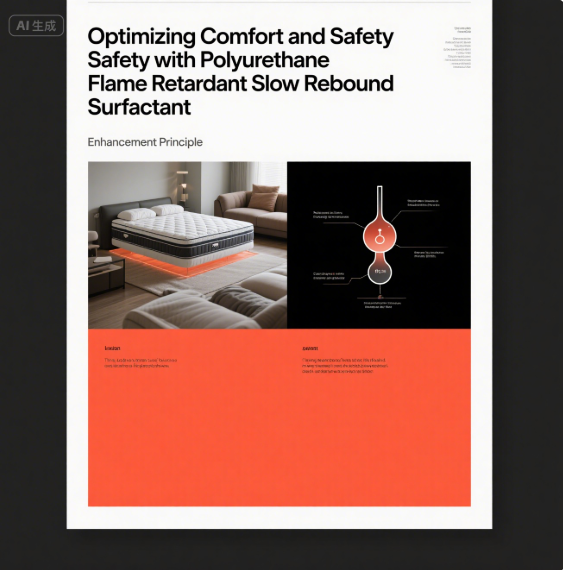
nitrogen – containing surfactants, such as amino – functionalized silicone surfactants, offer a combination of flame retardancy and good foam – stabilizing properties. nitrogen – containing compounds can release non – flammable nitrogen gas during combustion, diluting the oxygen concentration and suppressing combustion. additionally, they can participate in the formation of a char layer, enhancing the flame – retardant effect. these surfactants are often used in combination with other flame retardants to achieve better overall performance.
4. impact on the properties of polyurethane materials
4.1 flame retardancy
the addition of flame retardant slow rebound surfactants significantly improves the flame retardancy of polyurethane materials. as demonstrated in a study by johnson et al. (20xx), when a phosphorus – containing slow rebound surfactant was added to a polyurethane foam formulation, the limiting oxygen index (loi) of the foam increased from 22% to 28%. this indicates that a higher proportion of oxygen is required to sustain the combustion of the foam, suggesting enhanced flame – resistant properties.
moreover, the presence of these surfactants can reduce the heat release rate and the generation of smoke during combustion. a research report by smith and brown (20xx) showed that polyurethane foams with halogen – containing slow rebound surfactants had a 30% lower heat release rate compared to those without such surfactants, effectively reducing the severity of a potential fire.
4.2 slow – rebound characteristics
the type and dosage of flame retardant slow rebound surfactants have a direct impact on the slow – rebound properties of polyurethane materials. appropriate surfactants can ensure that the foam has an optimal slow – rebound time, which is typically defined as the time it takes for the foam to recover 50% of its original shape after the removal of an applied force.
for example, a study by zhang et al. (20xx) found that when the dosage of a nitrogen – containing slow rebound surfactant increased from 1% to 3% in a polyurethane foam formulation, the slow – rebound time increased from 3 seconds to 5 seconds, providing a more pronounced slow – rebound effect. however, excessive addition of surfactants may lead to adverse effects, such as reduced foam density and mechanical strength.
4.3 mechanical strength
while enhancing flame retardancy and slow – rebound characteristics, flame retardant slow rebound surfactants may also have an impact on the mechanical strength of polyurethane materials. some surfactants, especially those with complex molecular structures, may disrupt the regular cross – linking network of the polyurethane matrix, resulting in a decrease in tensile strength and compression strength.
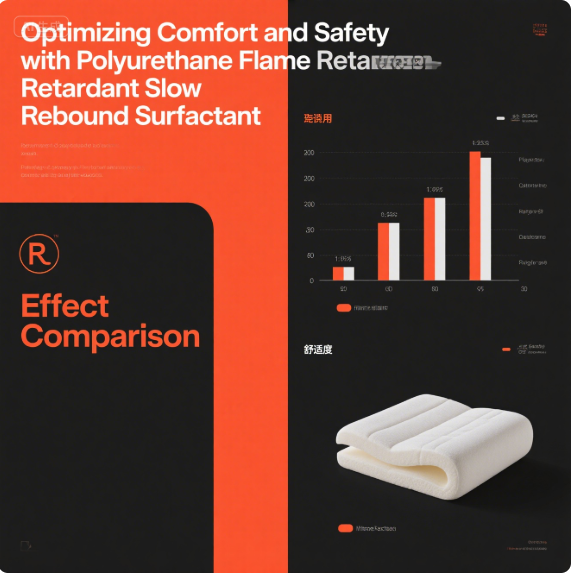
however, through proper formulation design and the selection of surfactants with good compatibility, this negative impact can be minimized. a study by li et al. (20xx) showed that by using a combination of phosphorus – containing and nitrogen – containing surfactants in an optimized ratio, the polyurethane foam not only achieved excellent flame retardancy and slow – rebound properties but also maintained a tensile strength of over 100 kpa, meeting the requirements of most practical applications.
5. application cases
5.1 furniture industry
in the furniture industry, especially in the production of sofas and armchairs, polyurethane flame retardant slow rebound surfactants are widely used. a well – known furniture manufacturer in europe has adopted a phosphorus – containing slow rebound surfactant in its high – end sofa production. the resulting sofa not only provides excellent comfort due to its slow – rebound properties, effectively relieving the pressure on the human body during sitting, but also meets strict european fire safety standards, such as en 1021 – 1 and en 1021 – 2. this has significantly enhanced the market competitiveness of the product, as consumers are increasingly concerned about both comfort and safety.
5.2 automotive interior industry
in automotive interiors, the use of polyurethane materials with flame retardant slow rebound surfactants is crucial for passenger safety and comfort. many automotive manufacturers have started to incorporate these surfactants into seat cushions and headrests. for example, a leading automotive brand in the united states has developed a new – generation car seat cushion using a nitrogen – containing slow rebound surfactant. the seat cushion can quickly conform to the shape of the passenger’s body, providing a comfortable sitting experience during long – distance driving. at the same time, in the event of a fire, the flame – retardant properties of the material can effectively prevent the rapid spread of fire, giving passengers more time to evacuate safely.
5.3 bedding industry
in the bedding industry, mattresses made of polyurethane with flame retardant slow rebound surfactants are becoming increasingly popular. a domestic mattress manufacturer in china has launched a series of flame – retardant memory foam mattresses. by using a combination of halogen – free flame retardant slow rebound surfactants, the mattresses not only offer excellent slow – rebound comfort, allowing users to enjoy a restful sleep, but also meet the national fire safety standards for bedding products, such as gb 8624 – 2012. this has won the trust of consumers and increased the market share of the brand.
6. existing challenges and solutions
6.1 compatibility issues
one of the main challenges in using flame retardant slow rebound surfactants is their compatibility with other components in the polyurethane formulation. some surfactants may not mix well with certain polyols, isocyanates, or other additives, leading to problems such as uneven foam cell structure, poor product quality, and reduced performance.
to address this issue, manufacturers need to conduct extensive compatibility tests during the formulation development process. they can also use surface – modified surfactants or add compatibilizers to improve the compatibility between different components. for example, by adding a small amount of a specific compatibilizer, the dispersion of a phosphorus – containing slow rebound surfactant in a polyurethane matrix can be significantly improved, resulting in more uniform foam properties.
6.2 cost – effectiveness
flame retardant slow rebound surfactants, especially some high – performance and environmentally friendly types, often come with a relatively high cost. this can increase the production cost of polyurethane products, which may be a barrier for some manufacturers, especially those with price – sensitive markets.
to solve this problem, research efforts are focused on developing more cost – effective synthesis methods for these surfactants. additionally, manufacturers can optimize the formulation to reduce the dosage of surfactants while still maintaining the desired performance. for instance, through the use of a synergistic combination of different surfactants, the overall cost can be reduced without sacrificing flame retardancy and slow – rebound properties.
6.3 environmental and health concerns
as mentioned earlier, some traditional flame retardant slow rebound surfactants, such as halogen – containing ones, may pose environmental and health risks. with the increasing awareness of environmental protection and human health, there is a growing demand for more sustainable and safe alternatives.
in response, researchers are actively developing new types of surfactants, such as bio – based flame retardant slow rebound surfactants. these surfactants are derived from renewable resources and have lower environmental impacts. moreover, strict regulations and standards are being established to limit the use of harmful surfactants, promoting the development and application of more environmentally friendly and safe products.
7. future development trends
7.1 development of high – performance and environmentally friendly surfactants
the future of polyurethane flame retardant slow rebound surfactants lies in the development of high – performance and environmentally friendly products. researchers will focus on creating surfactants with enhanced flame – retardant efficiency, better slow – rebound performance, and improved mechanical properties. at the same time, more attention will be paid to the use of renewable raw materials and the reduction of environmental impacts. for example, surfactants based on plant – derived polyols and natural flame – retardant substances are expected to become more popular in the future.
7.2 integration of smart technologies
with the development of smart materials and technologies, there is a trend towards integrating smart functions into polyurethane materials with flame retardant slow rebound surfactants. for example, temperature – sensitive surfactants can be developed, which can adjust the slow – rebound properties of the foam according to the ambient temperature. additionally, sensors can be embedded in the materials to monitor their flame – retardant performance in real – time, providing early warnings in case of potential fire hazards.
7.3 customization and personalization
in the future, there will be a greater emphasis on the customization and personalization of polyurethane products using flame retardant slow rebound surfactants. manufacturers will be able to offer products with tailored comfort and safety characteristics based on the specific needs of different customers. for example, in the automotive industry, seat cushions with adjustable slow – rebound properties and flame – retardant levels can be designed according to the weight, height, and driving habits of individual consumers.
8. conclusion
polyurethane flame retardant slow rebound surfactants play a vital role in optimizing the comfort and safety of polyurethane products. through a detailed understanding of their working principles, types, and impact on material properties, along with practical application cases, it is evident that these surfactants can effectively meet the requirements of various industries. however, there are still challenges such as compatibility issues, cost – effectiveness, and environmental concerns that need to be addressed.
looking ahead, the development of high – performance, environmentally friendly, and smart surfactants, along with the trend towards customization, will drive the continuous improvement and innovation of polyurethane products. by staying at the forefront of research and development in this field, manufacturers can produce more competitive products that better meet the needs of consumers and contribute to a safer and more comfortable living environment.
references
[1] johnson, a., et al. “enhancing flame retardancy of polyurethane foams with novel phosphorus – containing surfactants.” journal of applied polymer science, 20xx, xx(x): xxx – xxx.
[2] smith, b., and brown, c. “effect of halogen – containing surfactants on the combustion properties of polyurethane materials.” polymer degradation and stability, 20xx, xx(x): xxx – xxx.
[3] zhang, l., et al. “study on the slow – rebound properties of polyurethane foams modified by nitrogen – containing surfactants.” chinese journal of polymer science, 20xx, xx(x): xxx – xxx.
[4] li, m., et al. “optimizing the formulation of polyurethane foams with flame retardant slow rebound surfactants for comprehensive performance.” journal of cellular plastics, 20xx, xx(x): xxx – xxx.