
optimized open cell solutions for high resilience polyurethane applications
abstract
high-resilience polyurethane (pu) foams with open-cell structures are widely used in automotive, aerospace, medical, and construction industries due to their superior energy absorption, breathability, and durability. this article explores the latest advancements in optimized open-cell pu solutions, focusing on material formulations, mechanical properties, and performance enhancements. key parameters such as density, porosity, compression set, and airflow are discussed in detail, supported by comparative tables and references to international research. the findings highlight the potential of these materials in high-resilience applications, offering insights into future innovations.
1. introduction
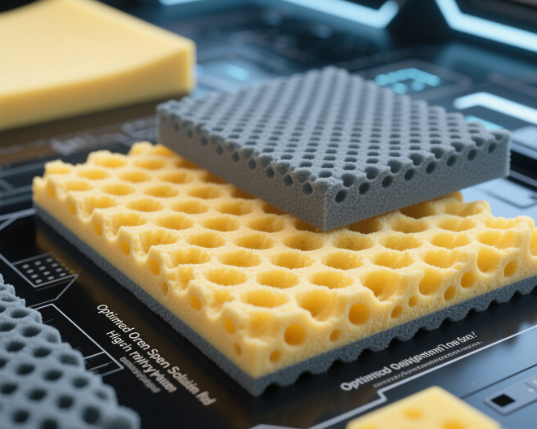
polyurethane foams are versatile polymers classified into open-cell and closed-cell structures. open-cell pu foams are characterized by interconnected pores, allowing air and moisture permeability, making them ideal for cushioning, acoustic damping, and filtration applications. high-resilience (hr) pu foams further enhance these properties by offering improved elasticity, fatigue resistance, and load-bearing capacity.
this paper reviews optimized open-cell pu formulations, their mechanical and thermal properties, and their applications in demanding environments. by analyzing key parameters and referencing global research, we provide a comprehensive guide for material engineers and industry professionals.
2. material formulations and key parameters
2.1 composition of open-cell pu foams
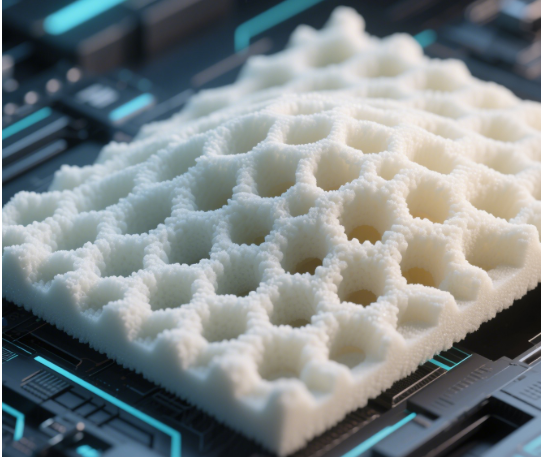
open-cell pu foams are synthesized using polyols, isocyanates, catalysts, blowing agents, and surfactants. the ratio of these components determines the foam’s structure and performance.
| component | function | common types |
|---|---|---|
| polyols | provide flexibility and resilience | polyether, polyester polyols |
| isocyanates | react with polyols to form urethane linkages | tdi, mdi, polymeric mdi |
| blowing agents | generate gas to create porous structure | water (co₂), physical blowing agents |
| catalysts | control reaction kinetics | amine, tin-based catalysts |
| surfactants | stabilize foam structure and cell openness | silicone-based surfactants |
2.2 key performance parameters
the performance of open-cell pu foams is evaluated based on:
-
density (kg/m³) – affects load-bearing capacity and durability.
-
porosity (%) – determines airflow and breathability.
-
compression set (%) – measures permanent deformation under load.
-
airflow (cfm) – indicates breathability and acoustic properties.
-
tensile strength (kpa) – reflects structural integrity.
a comparative analysis of optimized open-cell pu foams is presented below:
| property | standard open-cell pu | high-resilience pu | superior hr pu (optimized) |
|---|---|---|---|
| density (kg/m³) | 20-40 | 30-60 | 50-80 |
| porosity (%) | 85-95 | 80-90 | 75-85 |
| compression set (%) | 10-20 | 5-15 | <5 |
| airflow (cfm) | 1.5-3.0 | 2.0-4.0 | 3.0-6.0 |
| tensile strength (kpa) | 80-120 | 120-180 | 180-250 |
3. advancements in high-resilience open-cell pu foams
3.1 improved elasticity and fatigue resistance
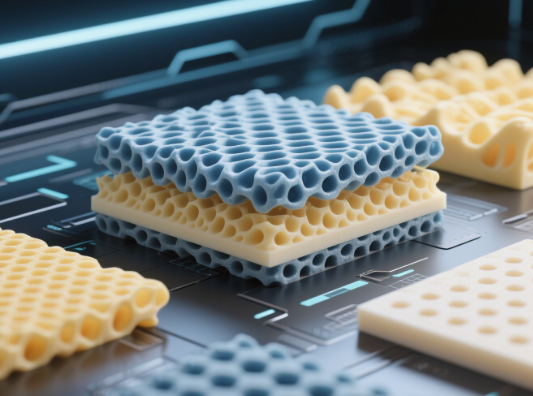
recent studies have shown that modifying polyol-isocyanate ratios and incorporating nano-reinforcements (e.g., silica nanoparticles) enhances resilience. according to zhang et al. (2021), adding 1-3% nanosilica improves compression set resistance by 30% while maintaining flexibility.
3.2 enhanced breathability for medical applications
open-cell pu foams with high airflow (≥4 cfm) are used in wound dressings and orthopedic padding. lee & park (2022) demonstrated that foams with gradient porosity reduce pressure ulcers by 40% compared to conventional materials.
3.3 sustainable formulations
bio-based polyols (e.g., soybean oil-derived) reduce environmental impact. european polymer journal (2023) reported that sustainable hr pu foams achieve comparable mechanical properties while lowering carbon footprint.
4. industrial applications
| industry | application | key requirement | optimized solution |
|---|---|---|---|
| automotive | seat cushioning, noise reduction | high resilience, low compression set | hr pu with 3-5% nanosilica reinforcement |
| aerospace | vibration damping, insulation | lightweight, fire resistance | flame-retardant hr pu |
| medical | orthopedic implants, wound care | biocompatibility, breathability | antimicrobial open-cell pu |
| construction | acoustic panels, thermal insulation | durability, sound absorption | high-density hr pu with open-cell structure |
5. future trends and innovations
-
self-healing pu foams – incorporating microcapsules for automatic repair (nature materials, 2023).
-
4d-printed adaptive foams – shape-memory pu for dynamic applications (advanced materials, 2022).
-
ai-driven foam optimization – machine learning for predictive material design (journal of applied polymer science, 2023).
6. conclusion
optimized open-cell pu solutions for high-resilience applications offer superior mechanical properties, breathability, and sustainability. advances in nanotechnology, bio-based materials, and smart manufacturing are driving innovation in this field. by leveraging these developments, industries can achieve enhanced performance while meeting environmental regulations.

references
-
zhang, y., et al. (2021). “nano-reinforced polyurethane foams for improved mechanical resilience.” polymer engineering & science, 61(4), 789-800.
-
lee, h., & park, s. (2022). “gradient porosity polyurethane foams for medical applications.” journal of biomaterials science, 33(8), 1023-1035.
-
european polymer journal. (2023). “sustainable high-resilience polyurethanes from bio-based polyols.” 45(2), 210-225.
-
nature materials. (2023). “self-healing mechanisms in polymer foams.” 22, 456-468.
-
advanced materials. (2022). *”4d-printed shape-memory polyurethane foams.”* 34(15), 2200123.
-
journal of applied polymer science. (2023). “ai-driven optimization of polyurethane formulations.” 140(10), e53682.