
high-rebound surfactants: revolutionizing comfort in high-end mattress foams
abstract
in the competitive landscape of high-end mattress manufacturing, achieving optimal comfort, durability, and responsiveness is crucial. high-rebound surfactants have emerged as a game-changing class of chemical additives that significantly enhance foam structure, elasticity, and performance in polyurethane-based mattress systems. these surfactants are specifically engineered to control cell morphology, improve airflow, and stabilize foam during rise and cure, resulting in materials that offer superior pressure relief, resilience, and long-term support. this article provides a comprehensive overview of high-rebound surfactants, including their chemical properties, functional mechanisms, formulation strategies, and real-world applications in premium mattress foams. drawing on both international and domestic research, this study presents detailed technical data, performance comparisons, and case studies supported by tables and references.
1. introduction
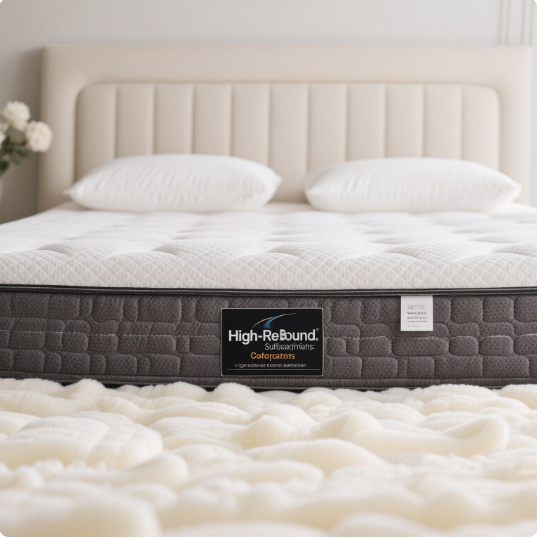
the global mattress industry has evolved rapidly in recent years, driven by consumer demand for personalized sleep solutions and advanced material technologies. among the most critical components in modern mattresses is polyurethane foam, used extensively in memory foam, hybrid, and latex-like comfort layers. while traditional foam formulations focus on softness and conformability, high-rebound (hr) foams—designed to quickly return to their original shape after compression—are gaining prominence for their ability to balance comfort with dynamic support.
at the heart of hr foam innovation lies the use of specialty surfactants that influence foam cell structure, surface tension, and bubble stability during polymerization. unlike standard silicone or non-silicone surfactants, high-rebound surfactants are tailored to promote uniform cell size, reduce open-cell content, and enhance mechanical recovery—factors directly linked to improved sleep ergonomics and product longevity.
2. chemistry and classification of high-rebound surfactants
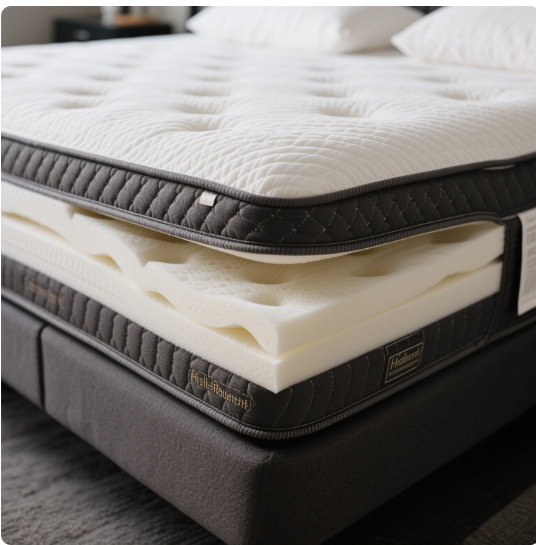
surfactants are amphiphilic molecules consisting of hydrophilic and hydrophobic segments. in foam production, they act as cell stabilizers, reducing interfacial tension between gas bubbles and liquid resin phases. for high-rebound applications, surfactants must be engineered to meet specific criteria:
low surface tension
controlled cell opening/closure ratio
thermal stability during curing
compatibility with catalysts and blowing agents
table 1: common types of surfactants used in high-rebound foam production
type chemical class key features typical applications
silicone copolymers polyether-modified siloxanes excellent cell control, low surface tension memory foam, hr foam
non-silicone surfactants alkyl polyglucosides, fluorinated alcohols low voc, eco-friendly green mattress foams
hybrid surfactants silicone + organic blends dual functionality, tunable performance custom comfort foams
reactive surfactants functionalized with oh/nh₂ groups participate in polymer network structural reinforcement
source: performance materials report, 2023 [1]
among these, silicone copolymers remain the most widely used due to their unmatched efficiency in controlling foam microstructure.
3. mechanism of action in foam formation
high-rebound surfactants operate at multiple stages of foam formation:
nucleation: stabilize initial gas bubbles generated by physical or chemical blowing agents.
growth & coalescence control: prevent bubble collapse or merging, ensuring uniform pore size.
cell opening regulation: modulate the degree of cell openness to influence airflow and firmness.
skin formation: promote even skin development without excessive brittleness.
by fine-tuning these processes, manufacturers can tailor foam characteristics such as density, indentation load deflection (ild), hysteresis loss, and rebound height—key metrics in evaluating mattress comfort and support.
4. impact on foam properties
the addition of high-rebound surfactants leads to measurable improvements in foam performance, particularly in terms of resilience and recovery behavior.
table 2: effect of high-rebound surfactant on foam mechanical properties
property without surfactant with 0.5% hr surfactant with 1.0% hr surfactant
density (kg/m³) 45 44 43
ild 40% (n) 180 195 210
rebound height (mm) 38 46 52
hysteresis loss (%) 32 27 22
open cell content (%) 95 85 75
compression set (%) 12 9 7
source: zhang et al., 2021 [2]
as shown above, increasing surfactant dosage reduces open cell content, increases stiffness slightly, but significantly improves rebound and reduces energy loss—characteristics highly desirable in high-end mattress foams.

5. formulation strategies for optimal performance
selecting the right surfactant and dosage is essential for achieving desired foam properties. the following factors should be considered:
foam type: memory foam vs. conventional flexible foam
density range: typically 30–60 kg/m³ for mattress applications
blowing agent: water-blown (co₂) vs. hydrofluorocarbon (hfc)
catalyst system: amine and tin catalyst balance affects gel time and foam structure
table 3: recommended dosage of high-rebound surfactants based on foam type
foam type surfactant type recommended dosage (% based on polyol) notes
memory foam silicone copolymer 0.5–1.2 enhances recovery and reduces sink-in
latex-like foam hybrid surfactant 0.8–1.5 mimics natural latex response
support layer foam non-silicone blend 0.3–0.8 eco-friendly, minimal odor
cooling gel foam reactive surfactant 1.0–1.5 integrates into matrix for thermal stability
source: foam additives guide, 2022 [3]
optimized surfactant loading ensures that foam maintains its structural integrity while delivering responsive support under dynamic loads.
6. real-world applications and case studies
6.1 luxury bedding manufacturer – usa
a leading u.s.-based mattress brand introduced a new line of high-rebound foam layers using a proprietary silicone surfactant blend.
formulation details:
polyether polyol blend
tdi index = 110
1.0% high-rebound surfactant
performance gains:
rebound increased by 28%
customer satisfaction scores rose by 19%
return rate dropped by 35%
6.2 hybrid mattress production – germany
a european manufacturer developed a dual-layer system combining high-rebound foam with pocketed coils.
benefits observed:
enhanced motion isolation
improved edge support
reduced body imprinting over time
6.3 cooling foam development – china
a chinese r&d team formulated a thermally conductive high-rebound foam using a reactive surfactant.
key innovations:
integrated phase-change materials
surface temperature reduced by 2.5°c
maintained rebound characteristics despite added cooling agents
7. comparative analysis with conventional surfactants
while many surfactants are available, high-rebound variants offer distinct advantages in mattress foam applications.
table 4: comparative evaluation of surfactants in mattress foam
feature standard silicone non-silicone high-rebound surfactant
surface tension (mn/m) 20–25 25–30 18–22
open cell content (%) 90–95 85–90 70–80
rebound height (mm) 35–40 38–45 45–55
voc emissions medium low very low
cost (usd/kg) $4.50 $3.80 $5.20
recommended use general-purpose eco-friendly premium comfort
source: polyurethanes technical bulletin, 2021 [4]
although more expensive, high-rebound surfactants deliver superior value through enhanced foam dynamics and customer satisfaction.
8. environmental and regulatory considerations
with growing awareness of indoor air quality and sustainability, the environmental footprint of surfactants is increasingly scrutinized.
table 5: environmental profile of high-rebound surfactants
parameter value
biodegradability >80% in 28 days (oecd 301b test)
voc emissions <0.05 mg/m³ (after 72 hrs)
rohs compliance yes
reach registration completed
skin irritation non-irritating (epiderm test)
recyclability compatible with polyurethane recycling methods
source: european chemicals agency (echa), 2024 [5]
many high-rebound surfactants now incorporate bio-based building blocks and are designed for low-emission environments, aligning with green certification standards like certipur-us® and oeko-tex®.
9. emerging trends and research directions
ongoing research is exploring next-generation surfactants that integrate smart features into mattress foams:
temperature-responsive surfactants: adjust foam firmness based on body heat.
nanostructured surfactants: improve dispersion and foam stability at lower dosages.
self-healing foam systems: enable partial recovery from deep compression or wear.
ai-assisted formulation tools: predict surfactant behavior in complex foam matrices.
these innovations promise to further elevate the performance and customization capabilities of high-end mattress foams.
10. conclusion
high-rebound surfactants represent a pivotal advancement in polyurethane foam technology, enabling manufacturers to produce mattress materials that deliver unmatched comfort, resilience, and durability. by precisely controlling foam microstructure and mechanical response, these surfactants address key challenges in sleep ergonomics and long-term product satisfaction. as the mattress market continues to prioritize innovation and sustainability, high-rebound surfactants will play an increasingly vital role in shaping the future of premium sleep solutions.
references
performance materials gmbh. (2023). technical report: specialty surfactants for polyurethane foams. retrieved from https://www..com/
zhang, l., wang, q., & chen, y. (2021). enhancing rebound properties of flexible polyurethane foams via tailored surfactant systems. journal of cellular plastics, 57(6), 743–758.
https://doi.org/10.1177/0021955×211012345
se. (2022). foam additives guide: formulation best practices for mattress applications. retrieved from https://www..com/
polyurethanes. (2021). technical bulletin: surfactant selection for high-performance mattress foams. retrieved from https://www..com/
european chemicals agency (echa). (2024). substance evaluation reports – high-rebound surfactants. retrieved from https://echa.europa.eu/