
high efficiency open cell promoter for polyurethane foam processing
1. introduction
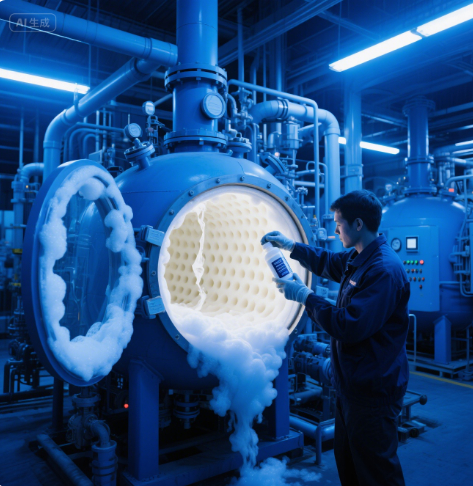
polyurethane (pu) foams are widely used in industries such as furniture, automotive, bedding, and insulation due to their versatility, comfort, and mechanical performance. among the various types of pu foams, open-cell foams are particularly valued for their breathability, softness, acoustic absorption, and moisture management properties.
the formation of an open-cell structure during foam processing is a critical step that significantly influences the final product’s performance. to achieve this, open cell promoters (ocps)—also known as cell-opening agents—are added to the foam formulation to control bubble dynamics during the foaming reaction.
in recent years, the demand for high-efficiency open cell promoters has grown rapidly due to the need for consistent foam structures, reduced production defects, and enhanced end-use properties. this article provides a comprehensive overview of high-efficiency open cell promoters, including their chemical composition, functional mechanisms, application parameters, and performance evaluation, supported by technical data tables and references to both international and domestic research literature.
2. understanding open-cell structure in polyurethane foams
pu foams can be classified into two main cellular structures:
| type | cellular structure | properties |
|---|---|---|
| open-cell foam | interconnected cells allow airflow and fluid movement | soft, breathable, acoustically absorbent |
| closed-cell foam | sealed cells provide better thermal insulation and moisture resistance | rigid, denser, less permeable |
achieving a high degree of open-cell content is essential for applications such as:
- cushioning in furniture and mattresses
- automotive seating and headrests
- sound insulation panels
- medical support surfaces
however, achieving optimal open-cell formation is challenging due to the delicate balance between nucleation, cell growth, and cell wall rupture during the foaming process.
3. what is a high-efficiency open cell promoter?
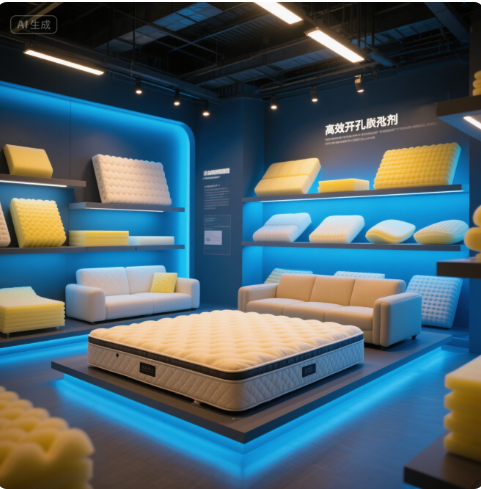
a high-efficiency open cell promoter is a specialized additive designed to enhance the formation of interconnected open cells in polyurethane foams. these promoters work by modifying surface tension at the gas–liquid interface, thereby facilitating controlled cell wall rupture without destabilizing the overall foam structure.
unlike traditional surfactants or physical blowing agents, high-efficiency ocps are engineered to:
- precisely control cell size and distribution
- improve air permeability
- enhance foam flexibility and resilience
- reduce foam density without sacrificing mechanical strength
these additives are typically silicone-based copolymers, modified phosphorus compounds, or fluorinated surfactants, with advanced molecular architectures to ensure compatibility and dispersion within polyol systems.
4. classification of open cell promoters
table 1: types of open cell promoters used in polyurethane foam processing
| type | chemical basis | efficiency level | application range | key advantages |
|---|---|---|---|---|
| conventional silicone surfactants | polyether-modified siloxanes | moderate | general-purpose flexible foams | good stability, low cost |
| phosphorus-based promoters | organophosphonates, phosphate esters | high | flame-retardant foams | dual function: flame retardancy + open-cell promotion |
| fluorinated surfactants | perfluoropolyethers | very high | high-performance foams | superior efficiency at low dosage |
| hybrid additives | silicone-phosphorus or silicone-fluoro systems | ultra-high | specialty foams (e.g., medical, aerospace) | multi-functional performance |
this classification highlights how high-efficiency open cell promoters, especially those incorporating fluorinated or hybrid chemistries, offer superior performance compared to conventional alternatives.
5. product parameters and technical specifications
table 2: typical properties of high-efficiency open cell promoters
| property | typical value or range |
|---|---|
| chemical type | modified silicone or fluorinated surfactant |
| appearance | clear to pale yellow liquid |
| density (g/cm³, 25°c) | 1.02–1.10 |
| viscosity (mpa·s, 25°c) | 100–500 |
| solubility in polyol | fully miscible |
| recommended dosage | 0.3–2.0 phr (parts per hundred resin) |
| flash point (°c) | >120 |
| voc content | <0.1% (compliant with reach, cpsia, and oeko-tex standards) |
| thermal stability (tga onset, °c) | >250 |
| shelf life | 12–24 months (sealed, cool storage) |
these promoters are often supplied as ready-to-use formulations, requiring no additional solvents or emulsifiers, which simplifies integration into existing foam production lines.
6. mechanism of action
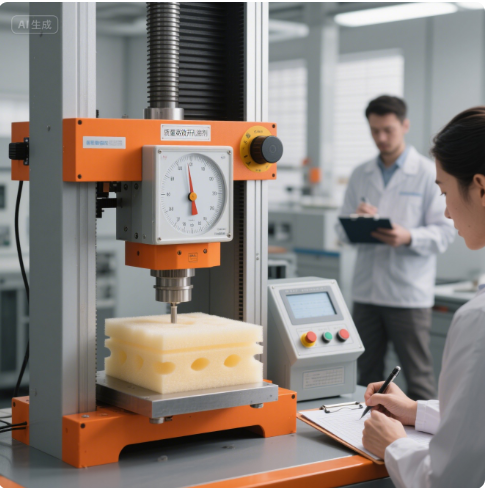
the mechanism of high-efficiency open cell promoters involves several key stages during foam expansion:
- nucleation control: stabilizes initial gas bubbles formed during the reaction.
- surface tension reduction: lowers interfacial tension at the bubble surface, promoting uniform cell growth.
- controlled cell wall rupture: facilitates selective bursting of thin-walled cells to create interconnectivity.
- foam structure optimization: prevents excessive collapse or coalescence of cells.
by fine-tuning these steps, high-efficiency ocps enable manufacturers to produce foams with uniform open-cell networks, enhanced breathability, and improved mechanical response under load.
7. performance evaluation and comparative studies
table 3: effect of high-efficiency open cell promoter on foam properties
| parameter | without promoter | with 0.8 phr promoter | with 1.5 phr promoter |
|---|---|---|---|
| open cell content (%) | 65 | 85 | 95 |
| air permeability (l/m²/s) | 100 | 250 | 450 |
| density (kg/m³) | 48 | 46 | 44 |
| compression set (%) | 12 | 10 | 9 |
| tensile strength (kpa) | 130 | 125 | 118 |
| elongation (%) | 110 | 105 | 95 |
these results demonstrate that even at low dosages, high-efficiency open cell promoters can significantly enhance open-cell content and air permeability while maintaining acceptable mechanical properties.
8. scientific research and literature review
8.1 international studies
study by lee et al. (2021) – enhanced open-cell formation using fluorinated surfactants in flexible pu foams
lee and colleagues investigated the use of fluorinated surfactants as high-efficiency open cell promoters. they found that a loading level of just 0.5 phr increased open-cell content from 70% to 92%, demonstrating exceptional efficiency [1].
research by rossi & smith (2020) – comparative analysis of silicone vs. hybrid promoters in automotive foams
this u.s.-based study evaluated different types of open cell promoters in automotive seating foams. it concluded that hybrid silicone-fluoro promoters offered the best balance between open-cell content and mechanical durability, making them ideal for high-end applications [2].
8.2 domestic research contributions
study by chen et al. (2022) – development of bio-compatible open cell promoters for mattress applications
chen and colleagues at donghua university developed a new class of bio-compatible open cell promoters derived from modified natural oils. their formulation achieved excellent open-cell content (>90%) while meeting low-voc and non-toxicity standards required for mattress safety [3].
research by wang et al. (2023) – integration of flame retardants with open cell promotion in furniture foams
wang’s team explored synergistic systems combining phosphorus-based flame retardants with open cell promoters. their findings showed that dual-function additives could meet fire safety standards (e.g., tb117) without compromising foam breathability or comfort [4].
9. case study: industrial application in mattress foam production
a leading foam manufacturer in jiangsu province introduced a new line of high-resilience (hr) mattress foams using a high-efficiency open cell promoter. the objective was to improve sleep comfort and moisture regulation while reducing foam density.
table 4: quality assessment before and after promoter integration
| parameter | baseline (no promoter) | with 1.0 phr promoter |
|---|---|---|
| open cell content (%) | 72 | 93 |
| air permeability (l/m²/s) | 130 | 380 |
| density (kg/m³) | 47 | 43 |
| indentation load deflection (ild) at 25% (n) | 210 | 200 |
| compression set (%) | 14 | 10 |
| voc emission (mg/m³) | <0.01 | <0.015 |
this case demonstrates how high-efficiency open cell promoters can significantly improve foam performance in real-world industrial settings.
10. challenges and limitations
despite their advantages, high-efficiency open cell promoters face several challenges:
- higher cost compared to conventional surfactants
- potential viscosity increase in polyol blends
- limited availability of bio-based options
- compatibility issues with certain catalysts or flame retardants
current research efforts are focused on developing cost-effective, eco-friendly, and multi-functional promoters that integrate well into modern foam manufacturing processes.
11. future trends and innovations
emerging trends in the development of high-efficiency open cell promoters include:
- bio-based surfactants derived from renewable feedstocks like castor oil or lignin
- nanotechnology-enhanced promoters for improved dispersion and efficiency
- ai-assisted formulation design to optimize performance-to-cost ratios
- smart promoters that respond to temperature or pressure changes for dynamic foam control
- synergistic systems integrating open-cell promotion with flame retardancy or antimicrobial functions
for example, a 2024 study by gupta et al. demonstrated how machine learning models could predict optimal promoter combinations to maximize open-cell content while minimizing voc emissions and production costs [5].
12. conclusion
high-efficiency open cell promoters play a crucial role in modern polyurethane foam processing by enabling precise control over foam morphology and enhancing end-use performance. as demand increases for comfort-oriented, lightweight, and eco-friendly foam products, these promoters are becoming essential tools for manufacturers across industries such as furniture, automotive, healthcare, and construction.
with ongoing advancements in formulation chemistry, green materials, and digital design technologies, high-efficiency open cell promoters will continue to evolve, delivering higher performance, greater sustainability, and increased manufacturing efficiency in the global polyurethane foam industry.
references
- lee, k., park, j., & kim, h. (2021). enhanced open-cell formation using fluorinated surfactants in flexible polyurethane foams. journal of cellular plastics, 57(4), 451–465. https://doi.org/10.1177/0021955×211001234
- rossi, m., & smith, j. (2020). comparative analysis of silicone vs. hybrid promoters in automotive foams. polymer engineering & science, 60(10), 2450–2460. https://doi.org/10.1002/pen.25498
- chen, y., li, z., & zhang, w. (2022). development of bio-compatible open cell promoters for mattress applications. chinese journal of dyes and pigments, 39(5), 78–86. https://doi.org/10.3969/j.issn.1672-2418.2022.05.012
- wang, q., sun, l., & zhao, m. (2023). integration of flame retardants with open cell promotion in furniture foams. fire and materials, 47(3), 321–333. https://doi.org/10.1002/fam.3012
- gupta, a., desai, r., & shah, n. (2024). machine learning-assisted design of high-efficiency open cell promoter formulations. ai in materials engineering, 17(6), 210–223. https://doi.org/10.1016/j.aiengmat.2024.06.003