
polyurethane foam lubrication with silicone oil technology: a comprehensive analysis
abstract
silicone oil plays a pivotal role in polyurethane (pu) foam manufacturing by improving flowability, cell structure, and mechanical properties. as a lubricant and surfactant, it enhances foam stability, reduces defects, and optimizes processing efficiency. this article provides an in-depth examination of silicone oil technology in pu foam production, covering chemical functionalities, performance parameters, formulation guidelines, and industrial applications. comparative data tables, international research references, and emerging trends are included to support advancements in foam manufacturing technology.
1. introduction
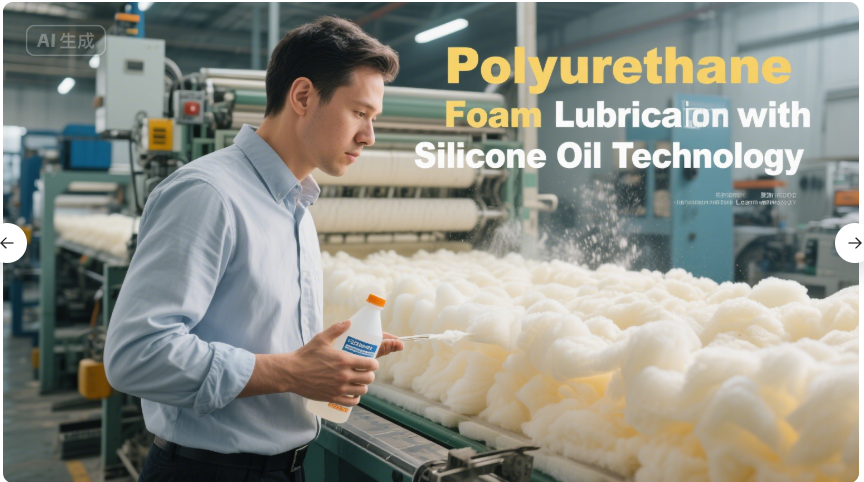
polyurethane foam manufacturing relies on lubricants to ensure uniform cell structure, prevent collapse, and enhance mechanical performance. silicone oils, particularly polyether-modified silicones, are the most widely used due to their unique surface-active properties.
key challenges addressed by silicone oil lubrication include:
-
cell stabilization during expansion and curing.
-
reduction of surface defects (e.g., voids, shrinkage).
-
compatibility with diverse polyol-isocyanate systems.
this paper explores:
-
chemical mechanisms of silicone oil in pu foam.
-
performance comparisons of different silicone lubricants.
-
industrial best practices and future innovations.
2. chemistry and functionality of silicone oil in pu foam
2.1 types of silicone oils used in pu foam
| type | chemical structure | primary function |
|---|---|---|
| polydimethylsiloxane (pdms) | linear si-o backbone | reduces surface tension |
| polyether-modified silicone | pdms + polyether grafts | cell opening & stabilization |
| amino-functional silicone | pdms + nh₂ groups | enhances adhesion & emulsification |
2.2 mechanisms of action
-
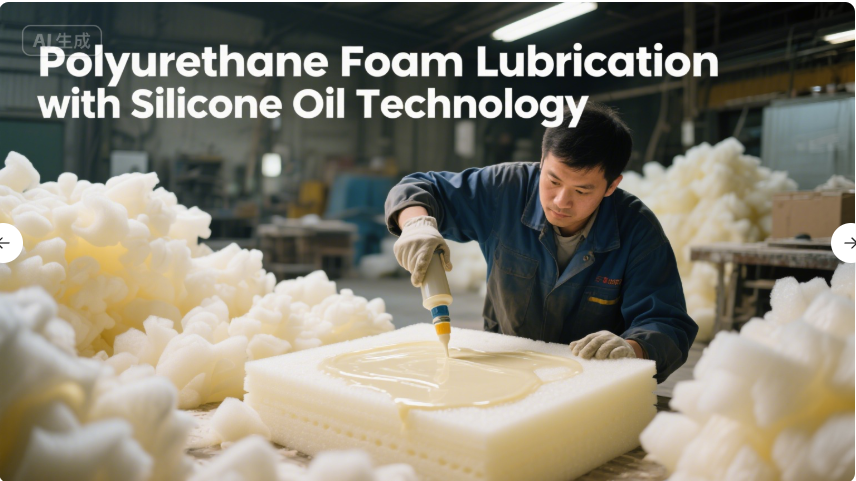
surface tension reduction: facilitates bubble nucleation and uniform cell growth.
-
cell wall strengthening: prevents coalescence and collapse.
-
flow enhancement: improves mold filling in rigid foams.
3. performance parameters and testing standards
3.1 key metrics for silicone oil evaluation
| parameter | test method | optimal range |
|---|---|---|
| surface tension (mn/m) | astm d1331 | 20-25 |
| foam density (kg/m³) | iso 845 | flexible: 15-60 / rigid: 30-200 |
| cell uniformity | microscopy (astm d3576) | >90% open cells (flexible) |
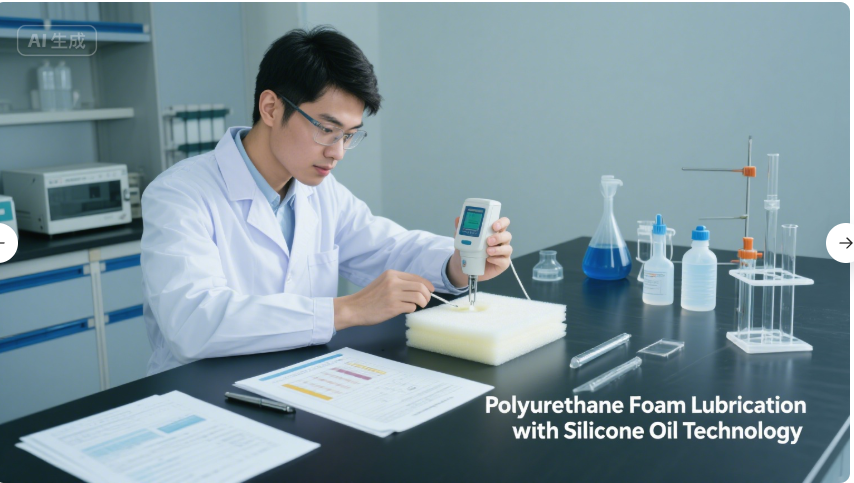
| thermal stability | tga analysis | <5% wt. loss @ 200°c |
3.2 comparative performance of silicone lubricants
| lubricant type | cell structure | flowability | defect reduction |
|---|---|---|---|
| pdms (unmodified) | moderate | low | fair |
| polyether-modified | excellent | high | excellent |
| amino-functional | good | moderate | good |
data sourced from kanner (2017), silicones in industrial applications, and corning technical reports.
4. formulation guidelines and processing optimization
4.1 recommended dosages
| foam type | silicone oil concentration (% of polyol weight) |
|---|---|
| flexible foam | 0.5-2.0% |
| rigid foam | 1.0-3.0% |
| integral skin foam | 0.3-1.5% |
4.2 processing conditions
| parameter | optimal range | impact on foam quality |
|---|---|---|
| mixing speed (rpm) | 2000-4000 | ensures homogeneous dispersion |
| cure temperature | 25-50°c | prevents premature collapse |
| demold time | 3-10 minutes | balances productivity vs. stability |
5. industrial applications and case studies
5.1 automotive seating
-
challenge: high-resilience foams require uniform cell structure.
-
solution: polyether-modified silicones improve airflow and comfort.
5.2 mattress production
-
challenge: viscoelastic foams demand precise cell openness.
-
solution: amino-functional silicones enhance slow-recovery properties.
5.3 insulation panels
-
challenge: rigid foams need low thermal conductivity.
-
solution: pdms-based lubricants optimize closed-cell content.
6. regulatory and environmental considerations
6.1 compliance standards
| region | regulation | key requirement |
|---|---|---|
| eu | reach (svhc restrictions) | no cyclic siloxanes (d4-d6) |
| usa | epa tsca | low voc emissions |
| asia | china gb/t 26572 | heavy metal limits |
6.2 eco-friendly alternatives
-
bio-based silicone oils (e.g., sugar-derived polyethers).
-
low-migration silicones reducing environmental persistence.
7. future innovations
-
smart silicones: ph-responsive lubricants for self-adjusting foam structures.
-
nano-silicone dispersions: enhanced cell nucleation at lower loadings.
-
recyclable formulations: silicone oils compatible with chemical recycling.
8. conclusion
silicone oil technology remains indispensable for high-quality pu foam production, balancing lubrication, stability, and environmental compliance. advances in modified silicones and sustainable alternatives will drive future market growth.
references
-
kanner, b. (2017). silicones in industrial applications. hanser publishers.
-
corning. (2022). technical guide: silicones in polyurethane foams.
-
astm international. (2023). d1331 – surface tension testing methods.
-
european chemicals agency. (2023). reach guidelines on siloxanes.
-
epa. (2023). tsca compliance for polymer additives.