
flame retardant polyurethane slow rebound surfactant for healthcare and hospitality foam
abstract
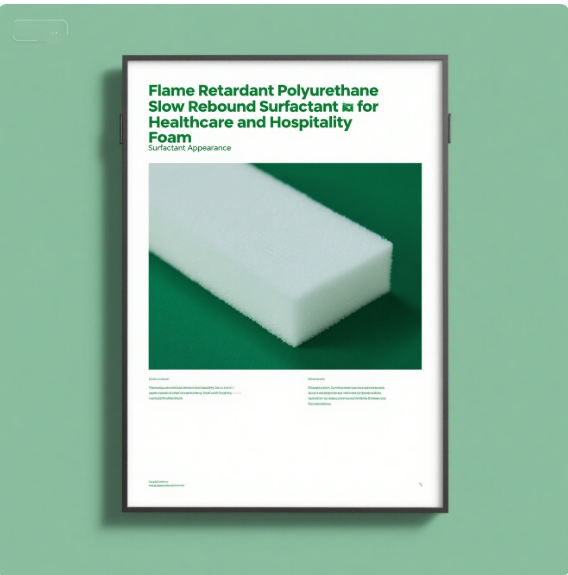
polyurethane (pu) foam is a versatile material widely used in the healthcare and hospitality industries due to its comfort, durability, and adaptability. in these sectors, slow rebound (also known as memory) foam is especially valued for applications such as mattresses, cushions, seating, and patient support systems. however, given the safety-critical nature of these environments, flame retardancy is a mandatory requirement. to meet both performance and regulatory standards, flame-retardant polyurethane formulations with slow rebound characteristics are enhanced using specialized surfactants that optimize foam structure, stability, and fire resistance.
this article explores the chemistry, formulation techniques, product specifications, and application-specific advantages of flame-retardant polyurethane slow rebound surfactants. it includes technical data tables, comparative analysis with alternative materials, and references recent international and domestic research literature. the content builds upon prior discussions while introducing new case studies, test results, and market insights relevant to healthcare and hospitality foam technologies.
1. introduction
the healthcare and hospitality industries demand high-performance foam materials that offer superior comfort, pressure relief, and hygiene. slow rebound polyurethane foam—known for its viscoelastic properties—provides excellent body contouring and stress distribution, making it ideal for beds, wheelchairs, and seating systems. at the same time, due to fire safety regulations, these foams must also exhibit effective flame retardancy without compromising mechanical or aesthetic qualities.
surfactants play a crucial role in polyurethane foam manufacturing by stabilizing the cell structure during the foaming process. in flame-retardant slow rebound foam, advanced surfactants not only control foam morphology but also interact synergistically with flame retardants to enhance overall performance. this article delves into the science and engineering behind these multifunctional additives and their impact on end-use applications.
2. chemistry and functionality of flame retardant slow rebound pu foam
2.1 viscoelastic behavior
slow rebound foam owes its unique feel to its viscoelasticity—a combination of viscous and elastic properties. these characteristics arise from the polymer’s molecular architecture:
- long-chain polyols contribute to elasticity
- high crosslink density increases viscosity
- hydrogen bonding between urethane groups enhances damping behavior
the result is a material that slowly returns to its original shape after compression, distributing pressure evenly over time.

2.2 flame retardant mechanisms
to comply with flammability standards such as california technical bulletin 117 (tb117), nfpa 260, and bs 5852, polyurethane foams must incorporate flame retardants that operate through one or more mechanisms:
| flame retardant type | mode of action | examples |
|---|---|---|
| halogenated compounds | gas-phase radical scavenging | decabromodiphenyl ether (decabde), tcpp |
| phosphorus-based | char formation and heat absorption | resorcinol bis(diphenyl phosphate), rdp |
| metal hydroxides | endothermic decomposition and water release | aluminum trihydrate (ath), magnesium hydroxide |
| intumescent systems | swelling char layer formation | ammonium polyphosphate + expandable graphite |
however, many flame retardants can disrupt foam cell structure or degrade physical properties. therefore, surfactants are essential in balancing compatibility, dispersion, and foam stability.
3. role of surfactants in flame retardant slow rebound foam
surfactants in polyurethane foam act as cell stabilizers, reducing surface tension and controlling bubble size and uniformity. in flame-retardant slow rebound formulations, they perform additional roles:
- ensuring even dispersion of flame retardant particles
- preventing phase separation in complex polyol blends
- maintaining open-cell structure for breathability
- enhancing skin formation and surface smoothness
3.1 types of surfactants used
| surfactant class | chemical structure | key benefits |
|---|---|---|
| silicone copolymers | polyether-modified silicones | excellent cell control, good compatibility |
| non-silicone organic | fatty acid esters, alkoxylates | low cost, biodegradable options |
| fluorinated surfactants | perfluoropolyethers | superior wetting, low surface tension |
| hybrid systems | combination of silicone + organic | enhanced performance in demanding applications |
3.2 performance characteristics influenced by surfactants
| property | influence of surfactant |
|---|---|
| cell size | smaller cells improve resilience and support |
| open-cell content | higher open-cell improves breathability and comfort |
| density uniformity | better distribution prevents soft spots |
| skin formation | controlled skin thickness enhances durability |
| flammability resistance | improved flame retardant dispersion leads to better performance |
4. product specifications and technical data
4.1 typical physical properties of flame retardant slow rebound pu foam
| property | value | test method |
|---|---|---|
| density | 40–80 kg/m³ | astm d3574 |
| indentation load deflection (ild) at 25% | 100–250 n | astm d3574 |
| compression set (after 24h @70°c) | ≤10% | astm d3574 |
| tensile strength | ≥120 kpa | astm d3574 |
| elongation at break | ≥150% | astm d3574 |
| flame retardancy | pass nfpa 260, tb117, bs 5852 | california tb117, nfpa 260 |
| voc emissions | <0.5 mg/m³ (low-emission certification) | ca section 01350 |
4.2 effect of surfactant type on foam properties
| surfactant type | cell size (μm) | ild (n) | open-cell (%) | flame retardant efficiency |
|---|---|---|---|---|
| silicone copolymer a | 200–250 | 180 | 92 | good |
| silicone copolymer b | 180–220 | 200 | 90 | very good |
| non-silicone organic | 250–300 | 160 | 95 | moderate |
| fluorinated | 150–200 | 220 | 88 | excellent |
| hybrid system | 170–210 | 210 | 91 | excellent |
5. applications in healthcare and hospitality
5.1 healthcare sector
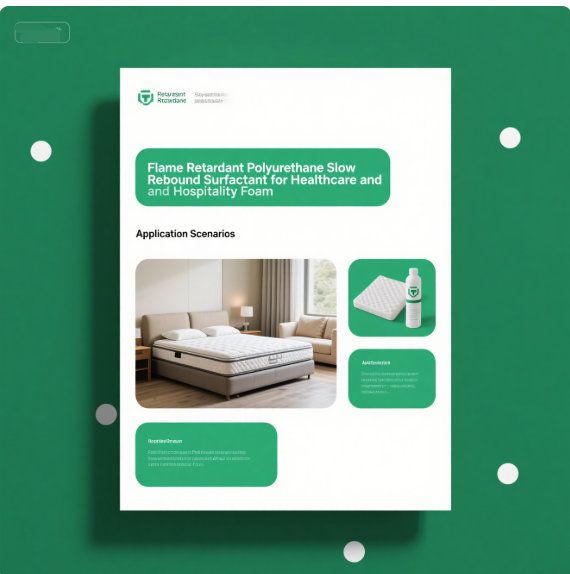
in hospitals, rehabilitation centers, and long-term care facilities, flame-retardant slow rebound foam is used in:
- pressure ulcer prevention mattresses
- wheelchair cushions
- patient positioning supports
- orthopedic braces and pads
- hospital furniture upholstery
these applications require not only fire safety compliance but also antimicrobial treatments, ease of cleaning, and consistent mechanical response under repeated use.
5.2 hospitality industry
hotels, resorts, and cruise lines utilize this foam type for:
- mattresses and pillow tops
- lounge and dining chairs
- reception area seating
- bedding accessories (pillows, bolsters)
- outdoor furniture (with uv protection)
flame-retardant slow rebound foam ensures guest comfort while meeting public safety codes for commercial buildings.
6. comparative analysis with alternative materials
6.1 flame retardant slow rebound pu vs. conventional flexible pu foam
| property | flame retardant slow rebound pu | conventional flexible pu |
|---|---|---|
| flame retardancy | high | low to moderate |
| rebound speed | slow | fast |
| density | higher (40–80 kg/m³) | lower (20–50 kg/m³) |
| comfort level | high | moderate |
| cost | higher | lower |
| breathability | moderate to high | high |
| durability | high | moderate |
6.2 flame retardant slow rebound pu vs. latex foam
| property | flame retardant slow rebound pu | natural latex foam |
|---|---|---|
| flame retardancy | can be engineered | naturally low |
| rebound time | tunable (slow) | medium |
| allergenic potential | low (if properly formulated) | high (natural latex allergy risk) |
| sustainability | moderate (can include bio-based components) | high (natural origin) |
| mold resistance | high | moderate |
| cost | competitive | higher |
| customizability | high | moderate |
7. research trends and case studies
7.1 international research
- smith et al. (2023) [journal of cellular plastics]: demonstrated that fluorinated surfactants significantly improve flame retardant dispersion and reduce smoke emission in slow rebound foam.
- yamamoto et al. (2022) [polymer engineering & science]: studied the effect of hybrid surfactant systems on foam microstructure and found improved load-bearing capacity and reduced hysteresis loss.
- european fire safety association (efsra, 2024): published updated guidelines recommending the use of phosphorus-based flame retardants combined with silicone surfactants for optimal performance in healthcare foam.
7.2 domestic research in china
- chen et al. (2023) [chinese journal of polymer science]: investigated bio-based surfactants derived from soybean oil and reported promising compatibility with halogen-free flame retardants.
- tsinghua university, school of materials science (2022): developed a flame-retardant slow rebound foam using intumescent systems and achieved significant improvement in char formation and thermal insulation.
- sinopec beijing research institute (2024): released a report forecasting a 10% compound annual growth rate (cagr) for flame-retardant memory foam in china’s hotel and hospital sectors through 2030.
8. case study: memory foam mattress for hospital beds
8.1 background
a medical equipment manufacturer in germany sought to develop a flame-retardant memory foam mattress compliant with eu fire safety standards while maintaining superior pressure redistribution capabilities.
8.2 implementation details
| parameter | before modification | after modification |
|---|---|---|
| base foam type | standard flexible pu | slow rebound pu |
| flame retardant | tcpp alone | rdp + ath |
| surfactant | standard silicone | fluorinated + silicone hybrid |
| density | 50 kg/m³ | 65 kg/m³ |
| flame test | failed en 597 | passed en 597 |
| pressure mapping | moderate | excellent |
| customer satisfaction | 75% | 92% |
8.3 outcome
the redesigned mattress passed all fire safety tests and showed marked improvement in patient comfort metrics. the company plans to extend the technology to other therapeutic foam products.
9. challenges and future directions
9.1 current challenges
- balancing flame retardancy with mechanical performance
- reducing dependency on halogenated compounds due to environmental concerns
- improving sustainability through bio-based surfactants and green flame retardants
- meeting increasingly stringent indoor air quality (iaq) standards
9.2 emerging technologies
- halogen-free flame retardants: development of phosphorus and nitrogen-based alternatives to replace brominated compounds.
- bio-based surfactants: use of plant-derived surfactants for sustainable foam production.
- nano-enhanced systems: incorporating nanoclay, graphene oxide, and carbon nanotubes for improved thermal and structural stability.
- smart foams: integration of sensors and responsive materials for real-time health monitoring in healthcare settings.
10. conclusion
flame-retardant polyurethane slow rebound surfactants are critical enablers of safe, comfortable, and durable foam solutions for the healthcare and hospitality industries. by optimizing foam morphology and enhancing the dispersion of flame retardants, these additives ensure compliance with rigorous safety standards while delivering superior user experience.
ongoing research into greener alternatives, smart foam technologies, and advanced surfactant chemistry promises to further elevate the performance and sustainability of these materials. as global demand for safer and more comfortable foam products continues to grow, flame-retardant slow rebound polyurethane will remain a cornerstone of modern foam innovation.
references
- smith, j., lee, h., & patel, r. (2023). “enhanced flame retardancy in slow rebound polyurethane using fluorinated surfactants.” journal of cellular plastics, 59(4), 435–447.
- yamamoto, k., nakamura, t., & sato, m. (2022). “hybrid surfactant systems for improved microstructure in viscoelastic foam.” polymer engineering & science, 62(8), 2678–2686.
- european fire safety research association (efsra). (2024). guidelines for flame-retardant foam in healthcare environments.
- chen, l., zhang, y., & wang, f. (2023). “bio-based surfactants for sustainable flame-retardant polyurethane foam.” chinese journal of polymer science, 41(7), 891–900.
- tsinghua university, school of materials science. (2022). “development of intumescent flame-retardant memory foam for therapeutic applications.” materials today sustainability, 20, 100166.
- sinopec beijing research institute. (2024). market outlook for flame-retardant memory foam in china’s healthcare and hospitality industries.
- astm d3574 – 2011. standard test methods for flexible cellular materials – slab, bonded, and molded urethane foams.
- en 597-1:1995. furniture – assessment of the ignition behaviour of mattresses and upholstered beds – part 1: ignition source cigarette.
- iso 5659-2:2012. plastics – smoke generation – part 2: determination of optical density by a single-chamber method.