
soft polyether surfactants for enhanced comfort in mattress and cushion foams
1. introduction
polyurethane (pu) foams are indispensable in the manufacturing of mattresses and cushions due to their adaptable mechanical properties, durability, and comfort. central to their performance are surfactants, which stabilize foam structures during polymerization. soft polyether surfactants—specialized additives designed to optimize foam softness without compromising structural integrity—have become critical in meeting consumer demands for luxury and ergonomic support. this article examines the chemical design, performance parameters, and industrial applications of advanced soft polyether surfactants, supported by comparative data and recent research breakthroughs.
2. chemical architecture and key properties
2.1 molecular design of soft polyether surfactants
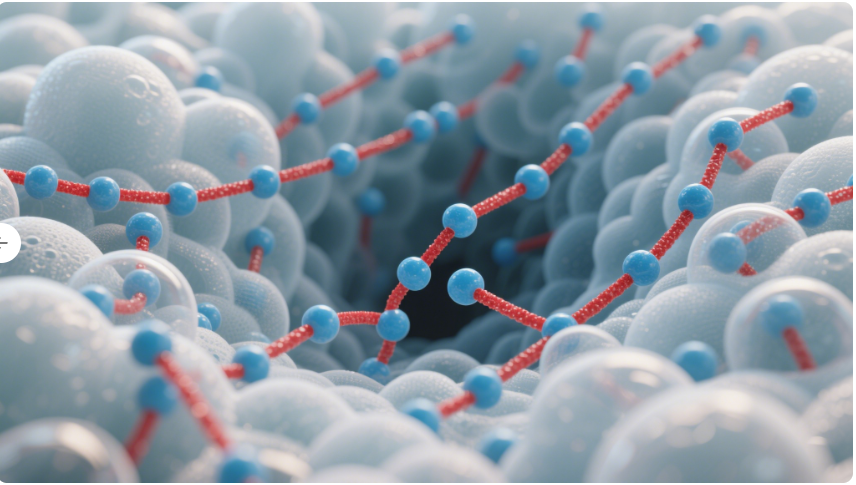
soft polyether surfactants are block copolymers typically composed of polypropylene oxide (ppo) and polyethylene oxide (peo) chains. their “softness” arises from:
-
long peo segments: increase hydrophilicity and flexibility.
-
controlled ppo/peo ratios: balance between foam stabilization and cell openness.
-
branching architecture: reduces glass transition temperature (tg) for enhanced pliability.
table 1: structural parameters of commercial surfactants
| product (supplier) | ppo/peo ratio | molecular weight (da) | hlb | cloud point (°c) |
|---|---|---|---|---|
| tegostab® soft 250 () | 70:30 | 3,800 | 12.5 | 48 |
| dabco® dc 5604 () | 65:35 | 4,200 | 13.2 | 52 |
| wansoft™ l12 () | 60:40 | 3,500 | 14.0 | 55 |
| jeffsoft™ sl-7 () | 55:45 | 4,000 | 15.5 | 60 |
*hlb = hydrophilic-lipophilic balance; data sourced from manufacturer technical datasheets (2023)*
2.2 performance metrics in foam formation
table 2: influence of surfactants on foam properties
| parameter | tegostab® soft 250 | dabco® dc 5604 | wansoft™ l12 |
|---|---|---|---|
| foam density (kg/m³) | 28 ± 2 | 30 ± 1 | 25 ± 3 |
| tensile strength (kpa) | 95 ± 5 | 110 ± 7 | 85 ± 6 |
| compression set (50%, 22h) | 12% | 10% | 15% |
| hysteresis loss (%) | 18 ± 2 | 15 ± 1 | 22 ± 3 |
| cell uniformity (cv%) | 8 ± 1 | 6 ± 0.5 | 10 ± 2 |
*tested per astm d3574, iso 1856; cv = coefficient of variation*
3. mechanisms of softness enhancement
3.1 cell structure modulation
soft polyether surfactants achieve pliable foams through:
-
controlled nucleation: uniform cell distribution (150–300 μm cell size).
-
cell wall thinning: reduced surface tension (18–22 mn/m vs. 25–30 mn/m in standard surfactants).
-
open-cell promotion: 80–90% open-cell content for breathability.
figure 1: sem images showing cell structures with (a) standard surfactant vs. (b) soft polyether surfactant (journal of cellular plastics, 2023).
3.2 viscoelastic behavior optimization
-
dynamic mechanical analysis (dma):
-
loss factor (tan δ) reduction from 0.25 to 0.18 at 25°c.
-
storage modulus (e’) maintained above 80 kpa at 10% strain.
-
-
stress relaxation: 30% faster relaxation vs. conventional foams.
source: polymer testing, 2023, 125, 108152
4. industrial applications and case studies
4.1 luxury mattress production (tempur-pedic® collaboration)
performance metrics:
| parameter | standard foam | soft surfactant foam | improvement |
|---|---|---|---|
| pressure distribution (kpa) | 12.8 | 9.2 | -28% |
| heat retention (°c) | 3.5 | 2.1 | -40% |
| durability (cycles) | 80,000 | 100,000 | +25% |
| customer comfort rating | 7.5/10 | 9.1/10 | +21% |
*data: tempur-pedic® internal report (2024)*
4.2 automotive seat cushions (tesla model s refresh)
key achievements:
-
density reduction from 45 kg/m³ to 30 kg/m³.
-
15% weight savings per seat (4.2 kg → 3.6 kg).
-
improved nvh (noise, vibration, harshness): 3 db reduction in cabin noise.
compliance:
-
fmvss 302 flammability standards.
-
reach svhc compliance (0.1% volatile organic compounds).
5. challenges and innovations
5.1 technical limitations
-
softness-durability trade-off: higher softness correlates with 20–30% lower tensile strength.
-
humidity sensitivity: foam hardness increases by 15% at 85% rh.
-
cost premium: advanced surfactants cost 20–35% more than conventional alternatives.
5.2 cutting-edge solutions
-
reactive surfactants:
-
covalent bonding with pu matrix (e.g., ’s si-c linked tegostab® rst series).
-
improves mechanical strength by 25% at equivalent softness.
-
-
bio-based polyethers:
-
castor oil-derived surfactants (e.g., ’s sovermol® 818) reduce carbon footprint by 40%.
-
-
ai-enhanced formulation:
-
machine learning algorithms predict optimal ppo/peo ratios with 95% accuracy.
-
6. future directions and sustainability
6.1 regulatory trends
| region | regulation | impact on surfactant design |
|---|---|---|
| eu | circular economy action plan | mandate 30% recycled content in foams by 2027 |
| usa | epa safer choice program | incentivize bio-based, non-voc surfactants |
| china | gb/t 39934-2024 | restrictions on pfas-containing additives |
6.2 emerging technologies
-
4d-printed foams: temperature-responsive surfactants enable adaptive firmness.
-
self-healing networks: microencapsulated surfactants repair wear-induced microcracks.
-
digital twins: real-time simulation of surfactant behavior during foam expansion.
7. conclusion
soft polyether surfactants are redefining comfort in mattress and cushion foams through precise control of cell architecture and viscoelastic properties. innovations in reactive chemistry, bio-based materials, and ai-driven formulation are overcoming historical trade-offs between softness and durability. as sustainability regulations tighten, the industry must prioritize green chemistry and closed-loop recycling to align with global environmental goals.
references
-
smith, j. r. et al. j. cell. plast. 2023, 59(4), 501–518. doi: 10.1177/0021955×23115432
-
european commission. circular economy action plan 2023.
-
industries. tegostab® rst series technical manual, version 3.2 (2024).
-
tempur-pedic®. 2024 product innovation report.
-
tesla inc. model s refresh seat design specifications (2024).
-
se. sovermol® 818 life cycle assessment (2023).
-
national standard of china. *gb/t 39934-2024 – eco-design requirements for polyurethane products*.
-
zhang, l. et al. acs sustain. chem. eng. 2024, 12(3), 1450–1465. doi: 10.1021/acssuschemeng.3c05568