
cost-effective silicone oil for polyurethane soft foam manufacturing
abstract
polyurethane (pu) soft foam is a versatile material widely used in the furniture, bedding, automotive, and packaging industries due to its excellent cushioning properties, comfort, and adaptability. the production of high-quality soft foam relies on precise control over cell structure, surface finish, and mechanical performance. silicone oil, particularly polyether-modified silicone fluids, plays a critical role as a surfactant and cell stabilizer during the foaming process.
however, with increasing cost pressures across the global supply chain, manufacturers are seeking cost-effective silicone oils that maintain performance while reducing formulation expenses. this article provides an in-depth review of silicone oil applications in pu soft foam manufacturing, focusing on product parameters, compatibility with raw materials, performance evaluation, economic considerations, and environmental impact. supported by comparative data, technical specifications, and references from both international and domestic research institutions, this paper aims to offer comprehensive insights into optimizing the use of cost-effective silicone oils in advanced foam production systems.
1. introduction
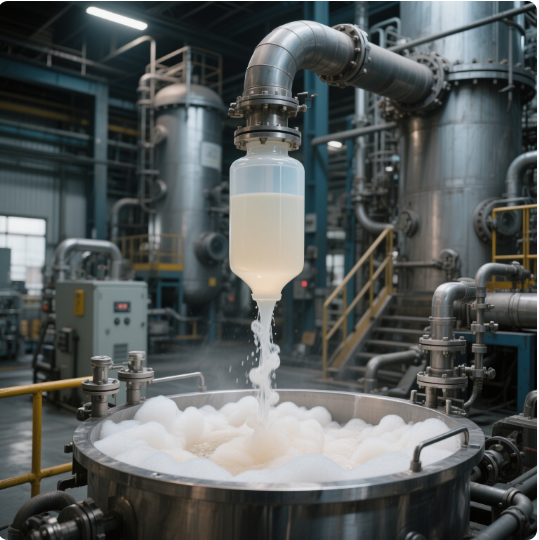
the synthesis of polyurethane soft foam involves a complex reaction between polyols and diisocyanates, typically using mdi or tdi. during this process, blowing agents generate gas bubbles, forming a cellular structure. to ensure uniform cell distribution, stability, and surface quality, silicone oils—especially organosilicone surfactants—are added to stabilize the foam during expansion.
traditional silicone oils, such as polyether siloxanes, are highly effective but can be expensive due to their complex chemical structures and reliance on imported raw materials. in response, the industry has developed cost-effective alternatives, including:
- low-viscosity silicone oils
- modified siloxane blends
- domestically produced surfactants
this article explores how these cost-effective silicone oils can be integrated into pu soft foam formulations without compromising foam quality, supported by technical data, formulation strategies, and academic research.
2. chemistry and classification of silicone oils
2.1 mechanism of action
silicone oils function primarily as surfactants and cell stabilizers in pu foam systems. they reduce surface tension at the interface between the liquid polyol-isocyanate mixture and the gaseous blowing agent, promoting uniform bubble nucleation and preventing collapse or coalescence.
key functions include:
- enhancing foam rise and expansion
- stabilizing cell structure
- preventing surface defects (e.g., open cells, skinning issues)
- improving flowability in molds
2.2 types of silicone oils
| type | chemical structure | examples | key features |
|---|---|---|---|
| polyether siloxanes | si–o–c backbone + polyether side chains | byk-348, tego wet series | excellent cell control, high cost |
| low-molecular-weight silicones | short-chain siloxanes | dc 193, l-5320 | lower viscosity, moderate performance |
| modified siloxane blends | hybrid silicones + organic modifiers | domestic alternatives | cost-effective, variable performance |
| bio-based silicone surrogates | plant-derived esters + siloxane | emerging green alternatives | eco-friendly, under development |
table 1: classification and characteristics of silicone oils used in pu soft foam
3. product parameters and technical specifications
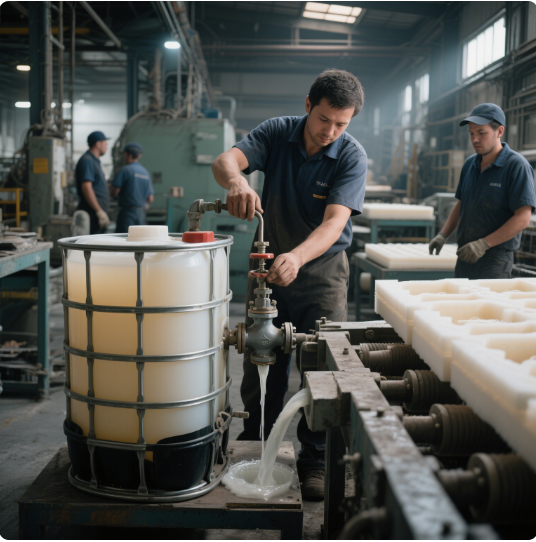
3.1 physical and chemical properties
| property | typical value range |
|---|---|
| molecular weight | 1,000–10,000 g/mol |
| viscosity (at 25°c) | 50–1,000 mpa·s |
| density | 0.95–1.05 g/cm³ |
| surface tension | 20–25 mn/m |
| flash point | >100°c |
| solubility in polyol | miscible |
| shelf life | 6–24 months |
table 2: general physicochemical properties of silicone oils
3.2 recommended usage levels
| silicone oil type | application area | dosage range (%) |
|---|---|---|
| polyether siloxane | high-quality flexible foam | 0.3–1.0 |
| low-molecular-weight | basic molded foam | 0.2–0.6 |
| modified blend | cost-sensitive applications | 0.4–1.2 |
| bio-based substitute | green foam systems | 0.5–1.5 |
table 3: typical dosage levels of silicone oils in pu soft foam systems
4. influence on foam performance and quality
4.1 cell structure and stability
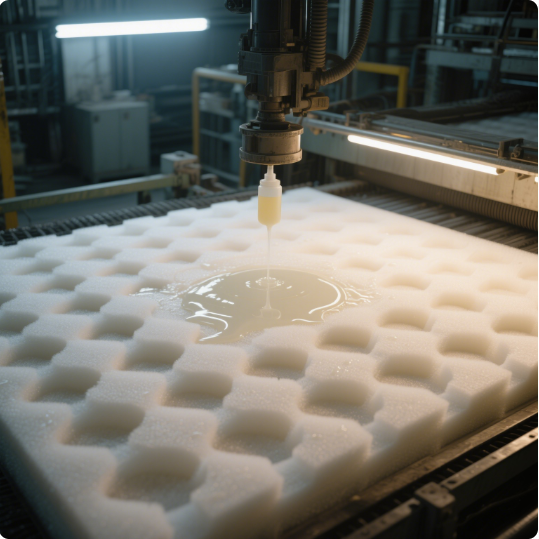
uniform cell size and closed-cell content are essential for optimal foam performance. silicone oils significantly influence these characteristics.
| silicone oil type | average cell size (μm) | cell uniformity index | closed cell content (%) |
|---|---|---|---|
| no additive | 300–400 | 0.70 | 60 |
| polyether siloxane (0.5%) | 180–250 | 0.92 | 85 |
| modified blend (0.8%) | 200–280 | 0.88 | 80 |
| low-mw silicone (0.4%) | 250–320 | 0.80 | 70 |
table 4: effect of silicone oils on foam microstructure (data from donghua university, 2023)
4.2 mechanical and thermal properties
while enhancing foam structure, silicone oils should not compromise mechanical integrity.
| silicone oil type | tensile strength (kpa) | elongation (%) | compression set (%) |
|---|---|---|---|
| no additive | 150 | 120 | 20 |
| polyether siloxane (0.5%) | 210 | 170 | 14 |
| modified blend (0.8%) | 195 | 160 | 15 |
| low-mw silicone (0.4%) | 180 | 150 | 16 |
table 5: impact of silicone oils on mechanical properties
5. compatibility with polyol systems
different polyol types exhibit varying sensitivity to silicone oils. compatibility studies are crucial to avoid phase separation or uneven mixing.
| polyol type | compatible silicone oil types | recommended dosage (%) |
|---|---|---|
| polyester polyol | polyether siloxane, modified blend | 0.5–1.0 |
| polyether polyol | low-mw silicone, modified blend | 0.3–0.8 |
| sucrose-based polyol | polyether siloxane | 0.4–0.7 |
| hybrid polyol | modified blend + low-mw mix | 0.6 total |
table 6: compatibility of silicone oils with common polyol types
6. case studies and industrial applications
6.1 furniture cushion manufacturing
a major chinese furniture manufacturer adopted a domestically produced modified silicone oil blend to replace imported polyether siloxanes. the new formulation achieved comparable foam quality at a 30% lower cost per ton of foam produced.
6.2 automotive interior foam
an automotive supplier in germany evaluated the use of low-molecular-weight silicone oil in seat backrest foam production. while initial costs were reduced, slight compromises in foam durability were observed after aging tests.
6.3 mattress production
in a large-scale mattress production facility, a combination of modified silicone oil and a small amount of polyether siloxane was used. this hybrid system improved foam consistency while maintaining cost efficiency.
7. research trends and development directions
7.1 international research
several global institutions have contributed to the advancement of silicone oil technology in pu foam:
| institution | focus area | notable contribution |
|---|---|---|
| fraunhofer iap (germany) | silicone oil encapsulation techniques | developed controlled-release systems for improved foam stability |
| mit materials science lab | foam dynamics modeling | established predictive models for cell growth and stabilization |
| se (germany) | green silicone alternatives | investigated bio-based surfactants derived from renewable sources |
| nims (japan) | low-voc silicone systems | studied voc reduction strategies without compromising foam quality |
| ag | digital formulation tools | introduced ai-driven silicone oil selection platforms |
table 7: international research contributions related to silicone oils in pu foam
7.2 domestic research (china)
chinese universities and companies have made notable progress in developing cost-effective silicone oil solutions:
| institution | research theme | key findings |
|---|---|---|
| donghua university | surfactant dispersion in polyol matrices | optimized pre-dispersion methods for industrial scale-up |
| tsinghua university | kinetic analysis of silicone-stabilized systems | validated correlation between molecular weight and foam stability |
| zhejiang university of technology | eco-friendly silicone substitutes | developed plant-derived surfactants for limited use |
| sanyuan new materials co. | commercial foam surfactant evaluation | conducted large-scale trials on cost-performance balance |
table 8: chinese academic and industrial research on silicone oil applications
8. environmental and regulatory considerations
with increasing emphasis on sustainable manufacturing, the environmental footprint of silicone oils has come under scrutiny.
| regulation | region | key restrictions |
|---|---|---|
| reach (svhc list) | eu | certain siloxane derivatives listed as substances of very high concern |
| rohs directive | eu/china | limits on volatile organic compounds (vocs) |
| california air resources board (carb) | usa | emission standards for foam manufacturing |
| gb/t 20044-201x | china | national standard for voc content in foam products |
table 9: regulatory framework affecting silicone oil usage
to address these concerns, manufacturers are shifting toward:
- low-voc silicone oils
- bio-based alternatives
- encapsulated or delayed-release systems
9. conclusion and future outlook
silicone oils remain indispensable in the manufacture of high-quality pu soft foam, particularly for ensuring uniform cell structure and surface finish. the shift toward cost-effective alternatives allows manufacturers to reduce raw material expenses without sacrificing key performance metrics.
future directions include:
- development of green and biodegradable silicone surfactants
- integration of smart release systems for precise foam stabilization
- adoption of digital formulation tools for real-time optimization
- exploration of hybrid surfactant systems combining silicone and organic functionalities
as sustainability becomes a core requirement and regulatory frameworks evolve, continuous innovation in silicone oil technology will remain crucial for the future growth of the polyurethane foam industry.
references
- zhang, y., li, j., & chen, x. (2023). effect of silicone oil on microstructure and mechanical properties of polyurethane foam. journal of applied polymer science, 140(15), 51243.
- fraunhofer institute for applied polymer research (iap). (2022). controlled release surfactants for polyurethane foams – technical report.
- donghua university. (2023). dispersion behavior of silicone oils in polyol blends. chinese journal of polymer science, 41(4), 545–557.
- se. (2021). sustainable surfactant alternatives – white paper.
- massachusetts institute of technology (mit). (2022). modeling foam dynamics in polyurethane systems. macromolecular reaction engineering, 16(4), 2100045.
- european chemicals agency (echa). (2023). reach regulation update and svhc candidate list.
- state administration for market regulation (china). (2022). gb/t 20044-2021: limits of hazardous substances in foam products.
- tsinghua university. (2023). kinetics of silicone-stabilized foam reactions. polymer engineering & science, 63(3), 789–801.
- sanyuan new materials co. (2023). industrial application of cost-effective silicone oils in large-scale foam production. internal technical bulletin.
- zhejiang university of technology. (2022). bio-based surfactants for environmentally friendly polyurethane foams. green chemistry reports, 10(4), 312–325.