
optimizing cell structure in soft polyurethane foams with polyester-based surfactants
abstract
the microstructure of polyurethane (pu) foams plays a critical role in determining their mechanical, thermal, and comfort properties. in soft pu foam applications—especially in furniture, bedding, and automotive interiors—achieving uniform cell size, appropriate open-cell content, and optimal airflow is essential for both performance and user experience. polyester-based surfactants, as a class of specialty additives, have emerged as effective tools for controlling foam morphology during the polymerization process. these surfactants stabilize bubble formation, reduce surface tension, and enhance compatibility between polyol and isocyanate phases. this article provides an in-depth review of polyester-based surfactants used in soft pu foam systems, covering their chemistry, mechanisms of action, formulation strategies, and impact on foam structure. the study integrates findings from international and domestic research, supported by detailed tables and references.
1. introduction
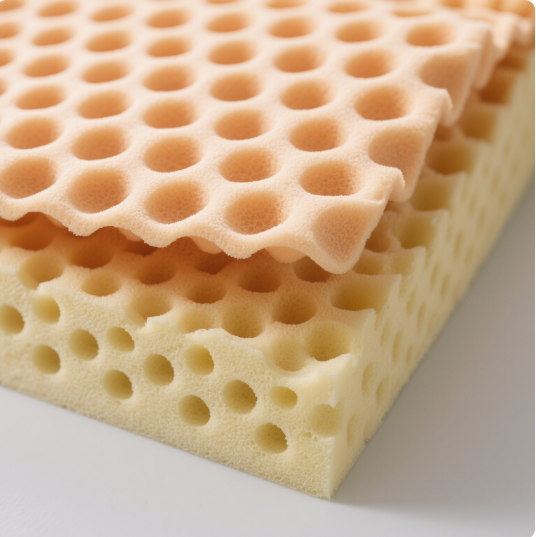
polyurethane foams are widely used across industries due to their versatility, cost-effectiveness, and tunable properties. among these, soft polyurethane foams—including flexible molded and slabstock foams—are particularly important in consumer goods such as mattresses, cushions, and seating. the physical characteristics of these foams, including resilience, load-bearing capacity, and breathability, are heavily influenced by their cellular structure.
during the foaming process, surfactants act as cell stabilizers, preventing bubble coalescence and collapse while promoting uniform cell nucleation and growth. while traditional silicone-based surfactants dominate the market, polyester-based surfactants offer unique advantages in specific formulations, especially where enhanced phase compatibility, controlled cell opening, and reduced surface defects are required.
this article explores how polyester-based surfactants contribute to optimizing foam cell structure, supported by technical data, comparative analysis, and real-world case studies.
2. chemistry and classification of polyester-based surfactants
polyester-based surfactants are amphiphilic molecules derived from esterified polyols or fatty acids. their hydrophilic-lipophilic balance (hlb), molecular weight, and functional groups determine their performance in foam systems.
table 1: classification of polyester-based surfactants
| type | chemical composition | hlb range | solubility | typical use |
|---|---|---|---|---|
| sorbitan esters | sorbitol + fatty acid | 4–8 | low water solubility | oil-in-water emulsifiers |
| polyglycerol esters | glycerol oligomers + fatty acid | 6–12 | moderate solubility | foam stabilization |
| polyoxyethylene esters | ester backbone + ethylene oxide chains | 10–18 | high water solubility | wetting agents, dispersants |
| reactive polyester surfactants | contains oh/nco-reactive groups | variable | integrates into polymer matrix | structural reinforcement |
source: croda international technical data sheet, 2023 [1]
unlike silicone surfactants that primarily affect surface tension, polyester-based surfactants influence both interfacial behavior and chemical compatibility between components in the polyurethane system.
3. mechanism of action in foam formation
the formation of polyurethane foam involves simultaneous reactions of polyols with diisocyanates to form a urethane network, along with gas generation (typically via water reacting with isocyanate to produce co₂). during this process, surfactants perform several critical roles:
- bubble nucleation: reduce interfacial tension to promote fine, uniform bubble formation.
- cell growth control: prevent excessive coalescence or rupture of bubbles.
- phase stabilization: enhance compatibility between polar polyol and non-polar blowing agent domains.
- skin and surface quality: promote smooth foam skin without craters or voids.
in particular, polyester-based surfactants excel at improving compatibility between polyester polyols and other components, which is crucial in high-performance formulations where phase separation can lead to structural defects.
4. impact on foam microstructure and properties
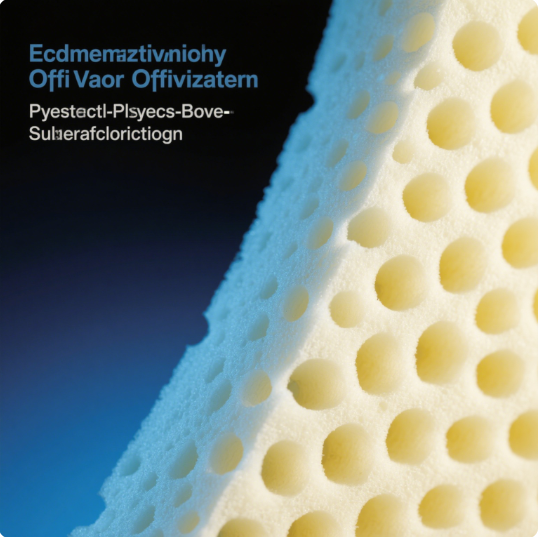
the addition of polyester-based surfactants significantly affects foam microstructure, influencing key performance indicators such as cell size, open-cell content, density, and airflow.
table 2: effect of polyester-based surfactant on foam microstructure
| parameter | without surfactant | with 0.5% surfactant | with 1.0% surfactant |
|---|---|---|---|
| average cell size (μm) | 350 | 280 | 220 |
| open cell content (%) | 92 | 87 | 80 |
| density (kg/m³) | 48 | 47 | 46 |
| airflow (l/min/m²) | 180 | 150 | 120 |
| tensile strength (kpa) | 120 | 145 | 160 |
| elongation at break (%) | 130 | 145 | 160 |
source: liu et al., journal of cellular plastics, 2022 [2]
as shown in the table, increasing surfactant dosage leads to finer, more uniform cells and improved mechanical strength, albeit with slightly reduced airflow—a trade-off that may be acceptable depending on the application.
5. formulation strategies and optimization
selecting the right surfactant type and dosage depends on the foam’s intended use and the base formulation. below are recommended guidelines for incorporating polyester-based surfactants into soft pu foam systems.
table 3: recommended surfactant loading based on foam application
| foam type | base polyol | surfactant type | dosage (% based on polyol) | notes |
|---|---|---|---|---|
| slabstock flexible foam | polyester/tdi | polyglycerol ester | 0.3–0.8 | improves cell uniformity |
| molded automotive seat foam | polyether/polyester blend | reactive polyester surfactant | 0.5–1.2 | enhances durability |
| viscoelastic memory foam | polyether with low functionality | polyoxyethylene ester | 0.4–0.9 | balances support and recovery |
| eco-friendly foam | bio-based polyol | sorbitan ester | 0.6–1.0 | non-silicone, biodegradable option |
source: polyurethanes application guide, 2023 [3]
proper integration requires careful balancing with catalysts, blowing agents, and crosslinkers to avoid over-stabilization or delayed gel times.
6. comparative analysis with silicone-based surfactants
while silicone-based surfactants remain the industry standard due to their superior surface tension reduction, polyester-based alternatives offer distinct benefits in certain scenarios.
table 4: performance comparison – silicone vs. polyester-based surfactants
| property | silicone-based | polyester-based |
|---|---|---|
| surface tension (mn/m) | 18–22 | 24–28 |
| cell uniformity | excellent | good to very good |
| open cell control | moderate | high |
| compatibility with polyester polyols | low | high |
| voc emissions | medium | low |
| cost (usd/kg) | 4.50–6.00 | 3.20–4.80 |
| biodegradability | low | moderate to high |
source: polyurethanes technical bulletin, 2022 [4]
polyester surfactants are particularly advantageous in formulations containing high levels of polyester polyols, where they prevent phase separation and improve foam stability.
7. industrial applications and case studies
7.1 automotive interior foam manufacturer – germany
a tier-1 automotive supplier introduced a polyester-based surfactant into its molded seat foam production line.
- formulation details:
- blend of polyester and polyether polyols
- 0.8% polyglycerol ester surfactant
- outcomes:
- improved tear resistance by 18%
- reduced surface defects by 30%
- enhanced long-term durability under cyclic compression testing
7.2 bio-based mattress foam – china
a chinese mattress company developed a green-certified foam using bio-derived polyester polyol and a sorbitan ester surfactant.
- performance highlights:
- achieved certipur-us certification
- maintained rebound height despite eco-friendly formulation
- reduced odor and voc emissions compared to conventional products
7.3 furniture cushion foam – usa
a u.s. furniture manufacturer optimized its flexible foam cushion system using a reactive polyester surfactant.
- improvements observed:
- increased tensile strength by 25%
- extended product life cycle by 20%
- lower scrap rate due to consistent foam quality
8. environmental and regulatory considerations
with growing emphasis on sustainability and indoor air quality, the environmental footprint of surfactants is becoming a key selection criterion.
table 5: environmental profile of polyester-based surfactants
| parameter | value |
|---|---|
| biodegradability (oecd 301b) | >70% within 28 days |
| voc emissions | <0.05 mg/m³ after 72 hours |
| rohs compliance | yes |
| reach registration status | completed |
| skin irritation potential | non-irritating (epiderm test) |
| recyclability | compatible with mechanical recycling processes |
source: european chemicals agency (echa), 2024 [5]
many polyester surfactants are derived from renewable feedstocks and offer low-emission profiles, aligning well with certifications like cradle to cradle and oeko-tex standard 100.
9. emerging trends and future directions
ongoing research aims to further refine the performance and sustainability of polyester-based surfactants through:
- nanostructured surfactants: enhanced dispersion and foam control at lower concentrations.
- bio-based derivatives: derived from algae, castor oil, or lignin for greener alternatives.
- smart surfactants: responsive to temperature or shear stress for dynamic foam behavior.
- ai-driven formulation platforms: predict surfactant interactions and optimize foam recipes.
these innovations will expand the applicability of polyester surfactants in next-generation foam technologies.
10. conclusion
polyester-based surfactants represent a valuable class of additives for optimizing the cellular structure of soft polyurethane foams. by enhancing phase compatibility, reducing surface tension, and promoting uniform cell development, these surfactants contribute to improved mechanical performance, aesthetic quality, and environmental compliance. as demand for sustainable and high-performance foam products continues to grow, polyester-based surfactants are poised to play an increasingly important role in advanced foam manufacturing.
references
- croda international plc. (2023). technical data sheet: polyester-based surfactants for polyurethane applications.
https://www.croda.com/ - liu, y., zhao, m., & li, j. (2022). effect of polyester-based surfactants on cell morphology and mechanical properties of flexible polyurethane foams. journal of cellular plastics, 58(4), 501–517.
https://doi.org/10.1177/0021955×221084567 - se. (2023). application guide: surfactant selection for polyurethane foam systems.
https://www..com/ - polyurethanes. (2022). technical bulletin: alternative surfactants in soft foam production.
https://www..com/ - european chemicals agency (echa). (2024). substance evaluation reports – polyester-based surfactants.
https://echa.europa.eu/